

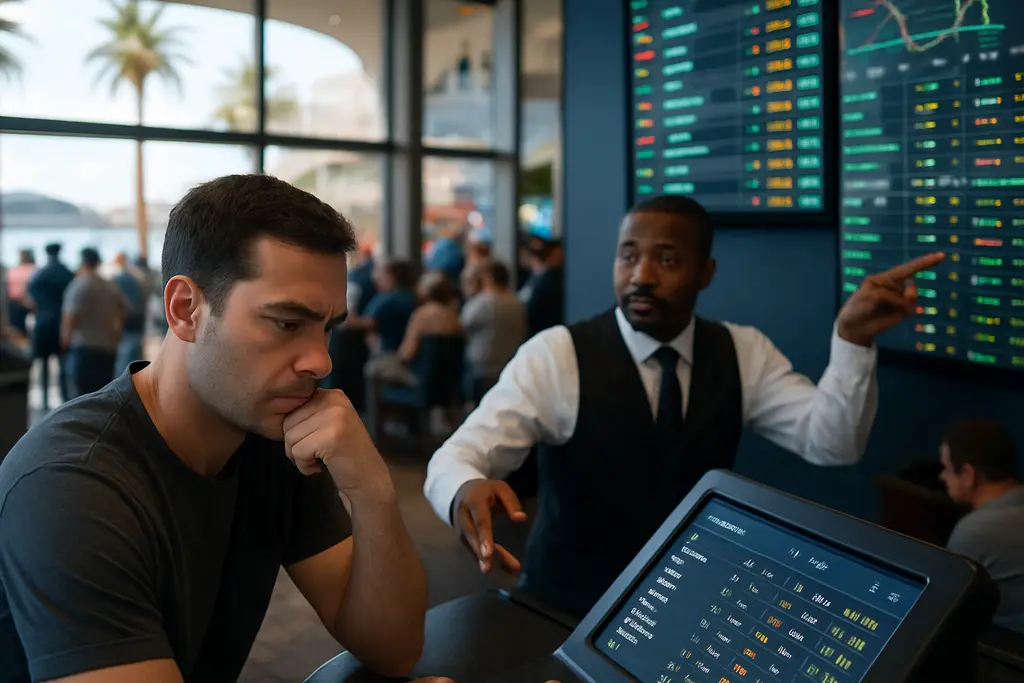
Prediction Market Rules have become a practical betting-access issue, not just a legal debate. For U.S. bettors comparing state-licensed sportsbooks, offshore books, prop menus, and live markets, the recent court record has made one point clear: sports-event contracts can face different treatment depending on the state, the circuit, and the legal theory in play.
Prediction Market Rules After The Ninth Circuit
On August 28, 2026, the 9th U.S. Circuit Court of Appeals ruled in Kalshi v. Nevada that sports-event event contracts offered by prediction markets were not swaps under the Commodity Exchange Act because they were sports bets. That ruling meant Nevada could regulate those contracts under state gambling law, according to The New York Times report.
That outcome mattered because it rejected the broad argument that federal derivatives law automatically blocks state gambling enforcement for sports-event contracts. For bettors, the practical issue is access. A market that appears available in one state may face restrictions, enforcement pressure, or a different compliance standard in another.
The complexity of prediction markets introduces several layers of analysis. The decision emphasizes the necessity for each state to evaluate not only the legality of these markets but also their operational attributes, reinforcing that states like Nevada now indeed possess the jurisdiction to regulate these contracts under state law. Bettors must stay informed about such jurisdictional nuances as they can greatly impact entry points to different betting markets.
Prediction Market Rules For Bettors
Prediction Market Rules now sit between two familiar betting categories. On one side are state-regulated sportsbooks, which publish standard sports markets such as spreads, totals, moneylines, futures, same-game formats, and player props where approved. On the other side are prediction-market contracts, which may frame a sports result as a tradable event contract rather than a sportsbook wager.
The distinction sounds technical, but it changes comparison work. A bettor checking an offshore sportsbook for prop depth should not treat a prediction-market screen as a direct substitute without asking basic questions: Is the market permitted where the bettor lives? Is it being challenged by state regulators? Does the product offer in-play trading, partial exits, or binary settlement terms that differ from sportsbook grading rules?
Moreover, prediction markets often present a unique aspect of dynamic pricing based on traded volumes and participant agreements. This can offer an entirely distinct market perception compared to the fixed odds of traditional sportsbooks. Bettors should assess these factors diligently, emphasizing the need for a deeper dive into specific product offerings and how they intersect with personal betting strategies.
What The Split Means For Coastal States
The research record showed a split between rulings that favored federal oversight and rulings that allowed state gambling enforcement to proceed. That split has been especially relevant for coastal states such as New Jersey, New York, Washington, Connecticut, and other jurisdictions with active sports-betting or gambling regulators. It also reached non-coastal states, so the issue is national rather than regional.
As of late August 2026, about 20 states were involved in litigation over whether firms such as Kalshi and Polymarket must follow state gambling laws or fall only under federal derivatives regulation, as reported by S&P Global. That number explains why bettors should avoid assuming a single national answer.
Coastal states, positioned at the forefront of regulatory development, must navigate these changes cautiously. States with existing regulatory frameworks for gambling may choose to accelerate or halt market access as these cases continue to influence policy decisions, adding another layer of complexity for bettors trying to navigate multiple jurisdictions.
State Power Versus Federal Oversight
The conflict is not only about labels. State regulators often view sports-event contracts through the same consumer-protection lens used for sportsbooks: licensing, location controls, responsible gambling rules, market approval, and enforcement authority. Federal derivatives oversight looks at contract-market status and commodities-law authority. The same product can sit at the center of both frameworks.
For bettors comparing books, that legal uncertainty should push the analysis back to fundamentals. Do not compare only price. Compare availability, settlement rules, market depth, limits, withdrawal terms, and whether the operator is clear about state access. If a platform changes access after a ruling, that is not the same kind of risk as a line move before kickoff. It is jurisdictional risk.
How Prediction Market Rules Affect Offshore Comparisons
Prediction Market Rules also impact how U.S. bettors compare offshore sportsbooks. Offshore books are not the same as state-licensed books, and prediction markets are not the same as offshore books. Each venue has different product design, oversight, and recourse if a dispute arises. Treating all three as interchangeable can lead to weak bankroll decisions.
A cautious comparison starts with what the market actually offers. A sportsbook prop is usually tied to a player, team, game state, or league result. A prediction contract may be structured around a yes-or-no event. A live sportsbook market may suspend, reprice, or limit during fast game action. A prediction market may show order-book depth, bid-ask gaps, or thin trading at less popular times. Those differences matter more than a flashy headline about access.
For readers interested in understanding sports-market structures across different sites, Betting Challengers provides a valuable network resource. This site helps frame comparison habits without assuming any single venue is inherently superior.
Offshore Books Are A Separate Category
Offshore sportsbook comparison should focus on market coverage, prop variety, live-betting menus, posted rules, payment reliability, and responsible staking. Prediction markets add another layer: whether state gambling authorities can regulate or restrict sports-event contracts after the recent rulings. That does not create an edge. It creates a need for cleaner due diligence.
A bettor comparing NFL, NBA, MLB, soccer, or World Cup markets should separate three questions. First, where is the market legally available to that bettor? Second, how deep is the market across pregame and live windows? Third, what happens if there is a grading dispute, market halt, or access change after a court order?
| Venue Type | Comparison Focus | Main Caution |
|---|---|---|
| State-Licensed Sportsbook | Approved sports markets, props, live betting, house rules | State-by-state market limits and approved bet types |
| Offshore Sportsbook | Market depth, prop menus, live access, payment terms | Different oversight and dispute channels |
| Prediction Market | Event-contract structure, liquidity, settlement terms | Unsettled state-versus-federal authority |
Prop Depth, Live Access, And Market Timing

Prop depth is where the legal issue becomes practical. Bettors often compare markets because one venue posts more player props, alternate lines, period markets, or niche event contracts than another. If court rulings cause a prediction platform to restrict certain sports-event contracts in a state, bettors may see fewer choices or shifting access.
Live betting has its own timing issue. A live sportsbook market can move quickly after injuries, red cards, pitching changes, weather delays, or pace shifts. Prediction markets may have a different rhythm if liquidity depends on counterparties rather than a house-managed price. Neither structure is automatically safer or sharper. The comparison should be market by market.
For a related legal-access angle, Sharp-9 has also covered prediction market regulation for U.S. bettors, which fits the same comparison problem: access, props, live markets, and legal uncertainty should be reviewed together.
Questions Before Comparing Prices
Before a bettor compares a sportsbook line with a sports-event contract, the first review should be structural, not predictive. No one needs invented odds or a forced pick to make this exercise useful. The better habit is to check whether the products settle the same way and whether both are accessible under the bettor’s state rules.
- Access: Does the venue clearly allow the bettor’s state, and has a recent ruling affected that access?
- Market depth: Are there enough offers, limits, or trading interest to enter and exit without poor pricing?
- Settlement: Does the contract or wager grade the event in the same way as a sportsbook rulebook?
- Live behavior: Does the market suspend, reprice, or thin out during fast game action?
- Dispute path: Is there a clear route if a grading or account issue occurs?
Those checks are dry by design. They protect bettors from confusing access with value. A broader menu is useful only if the market is clear, liquid enough for the intended stake, and available without trying to evade state rules.
Coastal States And Prediction Market Rules
Prediction Market Rules remained unsettled as of September 25, 2026. The Ninth Circuit ruling strengthened the position of states that want to regulate sports-event contracts as gambling, while other rulings in the research record showed that federal preemption arguments have not disappeared. That tension is exactly why bettors should read access notices and operator rules before comparing prices.
For coastal states, the impact is immediate in a practical sense even if the legal fight continues. New Jersey, New York, Washington, Connecticut, and other states have incentives to protect their gambling-law authority. Operators have incentives to defend federal treatment where possible. Bettors sit between those positions and should avoid treating a court win in one circuit as a national permission slip.
The safest analytical frame is simple: compare products, not slogans. Sportsbooks, offshore books, and prediction markets can all display sports prices, but they do not carry the same legal status, market mechanics, or user protections. A careful bettor can still study prop variety, live access, and pricing differences, but the first filter should be whether the market is available and clearly governed where the bettor lives.