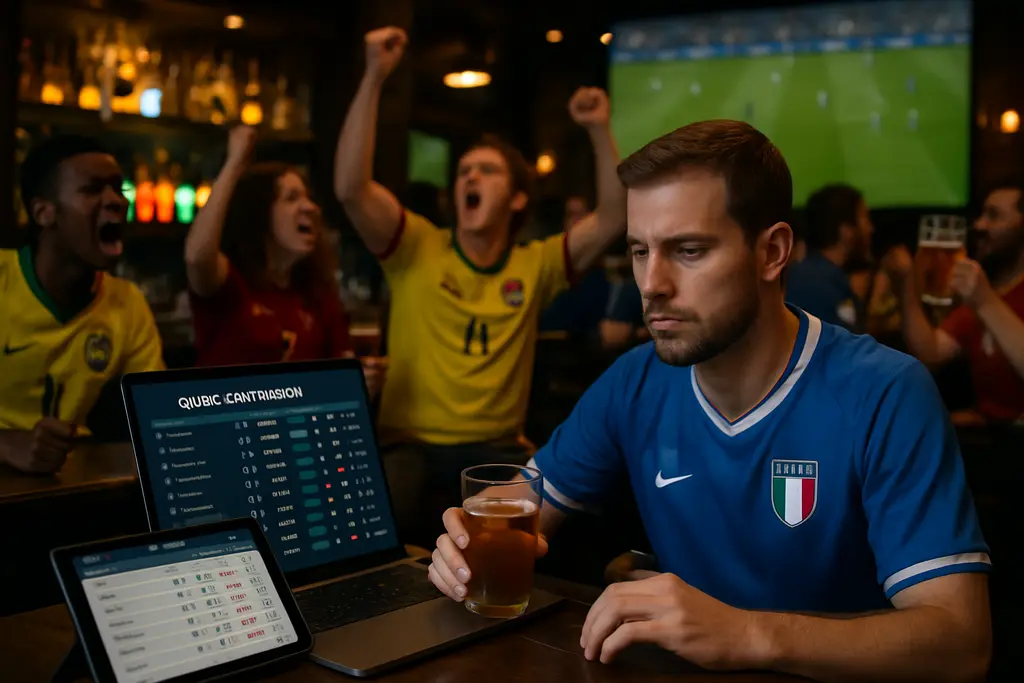
World Cup Betting gave U.S. bettors a clear stress test for comparing offshore sportsbooks against regulated operators. As of September 18, 2026, the tournament had already been played, so the useful question is not whether interest would rise. It did. The sharper question is how bettors should read the market structure that formed around the event: which books had deeper prop menus, which had more accountable consumer processes, and where live betting became less about … Read the rest
Kentucky Excise Tax and Prediction Markets
The Kentucky Excise Tax on prediction market transaction fees is not active yet as of September 17, 2026, but it has already changed the way U.S. bettors should compare event-contract platforms with regulated sportsbooks and offshore books. The tax is set to take effect on January 1, 2027, and the key operational issue is narrow but meaningful: Kentucky is taxing transaction fees charged by prediction market operators, not the full notional value of contracts.
That … Read the rest
Prediction Market Fairness For U.S. Bettors
Prediction Market Fairness is not a slogan for U.S. bettors; it is a test of access, rules, settlement risk, and jurisdiction. By September 17, 2026, the regulatory fight around event contracts had become too serious to treat prediction markets as a simple sportsbook substitute. The question is colder, almost judicial: which market gives the bettor clear terms, lawful access, visible depth, and a way to compare prices without pretending that uncertainty has vanished?
Why Prediction
… Read the restWorld Cup Live Market Depth Offshore Books
Live market depth was one of the quieter betting stories of the 2026 FIFA World Cup, held from June 11 to July 19, 2026. The public conversation often stopped at match winners, totals, and star-player props. The sharper market question was less theatrical: how much could a bettor actually place, at what speed, and how far would execution drift once the match state changed?
For U.S. bettors comparing offshore sportsbooks after the tournament, that question … Read the rest
Kalshi Lawsuit Signals Prediction Market Risk
The Kalshi lawsuit filed by New York on July 31, 2026, has turned a legal dispute over event contracts into a practical comparison problem for U.S. bettors. The question is no longer just whether a platform calls a product a prediction market, a derivatives exchange, or a sportsbook substitute. The sharper question is what protections, limits, market rules, and jurisdictional controls sit behind that label.
For bettors comparing state-regulated sportsbooks, offshore sportsbooks, and prediction-market platforms, … Read the rest
World Cup Live Betting: Offshore Vs Regulated
World Cup Live Betting during the 2026 tournament asked U.S. bettors to compare speed against safeguards. The matches played across June and July 2026 have already concluded as of September 15, 2026, so the useful question is not who to back now. It is what those matches showed about offshore books, regulated operators, live pricing, prop depth, and self-control when a market changes every few seconds.
Live betting, also called in-play or in-running betting, is … Read the rest
World Cup vig: Offshore vs Regulated Books
World Cup vig became easier to compare after the 2026 FIFA World Cup ended on July 19, 2026, with Spain beating Argentina in the final. The tournament ran from June 11 to July 19, and the useful betting lesson was not that one sportsbook type was always cheaper. The better lesson was narrower: main markets can tighten when volume is high, but offshore reduced-juice books and state-regulated U.S. books still tend to price risk differently.… Read the rest
Prediction Markets Legal Battles For Bettors
For U.S. bettors, Prediction Markets moved from a niche pricing tool into a direct legal and market-access question during 2026. The core issue is not whether a sports fan can find an opinion on a game outcome. It is whether an event contract tied to sports, politics, or public events is treated more like a federally regulated derivatives product or more like gambling that states can police. That distinction affects availability, market depth, account access, … Read the rest
Offshore Sportsbooks After Legal Pressure
Offshore Sportsbooks now sit under a colder legal light, and the market comparison for U.S. bettors has become less romantic, more procedural, almost clerical. The question is not whether a board looks longer at first glance. The question is whether the price, limit, settlement rule, funding path, and legal exposure survive inspection after recent state and federal pressure. The American Gaming Association’s State of the States 2026, released on May 12, 2026, reported that … Read the rest
New York Hold Rates: Offshore Betting Signals
New York Hold Rates became a sharper comparison point for U.S. bettors after June and July 2026 produced two very different sportsbook margin results. June showed record mobile betting volume with weak operator retention, while July showed lower handle but much stronger revenue. For offshore bettors, the lesson is not that one market is automatically better than another. The lesson is that sportsbook margin can swing with event mix, parlay outcomes, favorite performance, tax pressure, … Read the rest