


Remember when SCOTUS dropped the mic in 2018? The PASPA reversal didn’t just legalize wagering. It turned it into a national pastime where point spreads get more attention than polling margins. Today, sports betting terminology is more than just numbers on a screen. It’s the key to understanding modern risk culture.
Let’s break it down like Nate Silver analyzing battleground states. That -760 Chiefs line you’re staring at? It’s like Trump’s 2016 electoral map – seemingly improbable until the math hits you hard. We’re talking about moneyline vs. decimal vs. fractional systems, each with its own unique twist.
Here’s the kicker: odds formats reveal more about human psychology than any Rorschach test. Decimal odds whisper European sophistication. Moneylines scream American confidence. Fractionals? That’s your eccentric uncle, charmingly outdated but weirdly effective.
Want to navigate this landscape like a political junkie? Master the three-number systems shaping billion-dollar wagers. Because in today’s America, understanding the odds isn’t just smart. It’s survival.
What Are Betting Odds?
Sportsbooks use numbers that seem mysterious, but odds are their secret code. These figures aren’t random; they’re mathematical hieroglyphics that show how bookmakers see sports events. Let’s explore these numbers and find their true meaning.
Betting odds turn uncertainty into a calculated risk. When you see +350 next to the Lions, it’s not just a possible win. It’s a probability manifesto. Bookmakers hide their profit in these numbers, like a secret ingredient in a recipe. The real magic is when we turn these numbers into implied probability, revealing the house’s edge.
Here’s the decoder ring formula from our second source:
- Positive odds (+): 100 / (Odds + 100)
- Negative odds (-): |Odds| / (|Odds| + 100)
Take the +585 Steelers odds. Using the formula, we get 14.6% implied probability. That underdog story now seems like a Mission: Impossible sequel. Bookmakers aren’t charities; their probabilities always add up to over 100%, making them profit.
-110 feels as American as apple pie because it’s the bookie’s cut. That extra 10 cents on the dollar might seem small, but it adds up. The house always wins? More like the house always bakes.
This isn’t just about numbers; it’s a battle of the mind. Oddsmakers play with our perceptions like TikTok algorithms. Your task? See through the illusion. Calculate the true sports betting probability and compare it to the book’s version. The difference is where value lies.
Types of Odds Formats
Odds formats are like international dating apps—each region swipes right on its own style. The American “+/-” drama, Europe’s decimal precision, and Britain’s fraction-filled teatime debates all tell the same story through different lenses. Let’s decode these numerical dialects using political betting markets (yes, we’re all a bit salty about 2020) as our Rosetta Stone.
American Odds: The TikTok of Wagering
American odds operate like viral hashtags—everything revolves around that magic $100 bill. Positive numbers (+150) show how much you can win on a $100 bet. Negative numbers (-110) tell you how much you need to bet to win $100. It’s the perfect system for a culture that thinks in Benjamin Franklins and hot takes.
Take a 2024 presidential moneyline: Biden +150 vs. Trump -120. A $100 bet on Biden nets $150 profit if he wins. The Trump bet requires $120 to win $100. The conversion formula? For positive odds: Profit = (Odds/100) * Stake. Negative: Stake = (100/Odds) * Desired Profit.
Decimal Odds: Europe’s Metric System Moment
Decimal odds are the Ikea instructions of betting—clean, functional, and impossible to misinterpret. The number represents total return per $1 wagered, including your original stake. A 1.75 odd means every dollar becomes $1.75 if you win.
Remember when UK bookies had Biden at 1.3 and Trump at 4.0 pre-2020 election? A $100 Biden bet would’ve returned $130 ($30 profit), while the same Trump wager yielded $400. The math is blissfully simple: Payout = Stake × Decimal Odd. No calculators required.
Fractional Odds: Paddington Bear’s Parlor Game
Fractional odds are the croquet of betting systems—quintessentially British and slightly archaic. Expressed as 5/2 or 10/1, the first number shows the profit relative to the second number’s stake. A £10 bet at 5/2 pays £25 profit plus your original £10.
Let’s translate the 2020 odds to Royal Ascot terms. Biden at 1/3 (“three-to-one on”) meant risking £300 to win £100. Trump at 3/1 required a £100 bet for £300 profit. The formula? Profit = (Numerator/Denominator) × Stake. Perfect for tea-sipping mathematicians.
| Format | Example | $100 Bet Profit | Break-Even % |
|---|---|---|---|
| American | +150 / -110 | $150 / $90.91 | 40% / 52.4% |
| Decimal | 2.50 / 1.91 | $150 / $91 | 40% / 52.3% |
| Fractional | 3/2 / 10/11 | $150 / £90.91 | 40% / 52.4% |
Notice how all formats ultimately reveal the same probabilities? It’s like comparing Fahrenheit and Celsius—different scales, same temperature. The real magic happens when you convert between them using industry-standard formulas (we’ll get to those calculators in Section 8).
So which format reigns supreme? That’s the political polling question of sports betting. American odds thrive on drama, decimals on clarity, and fractions on tradition. Your choice depends on whether you’re Team iPhone Calculator or Team Abacus.
Implied Probability and Payout Calculation
Think of implied probability as Vegas’ version of political polling – except here, the house always budgets for a McConnell-sized margin of error. Let’s decode how bookmakers bake their profit into odds, using tools sharper than FiveThirtyEight’s election models.
Converting odds to percentages isn’t rocket science, but getting it wrong hurts more than misreading a battleground state. Take Golden State’s NBA championship odds at 9/2. The formula’s simple:
- Fractional odds denominator ÷ (denominator + numerator) × 100
- 2 ÷ (9 + 2) × 100 = 18.18% implied probability
But here’s the kicker – bookmakers aren’t charities. When you sum all teams’ probabilities in a market, you’ll find an overround (usually 104-107%). That extra 4-7%? That’s the house edge – the political filibuster of sports betting.
| Team | Odds | Implied Probability | Overround Contribution |
|---|---|---|---|
| Warriors | 9/2 | 18.18% | +1.2% |
| Celtics | 5/1 | 16.67% | +0.9% |
| Nuggets | 7/1 | 12.5% | +0.7% |
Now let’s talk payouts – the bankroll management sports betting equivalent of knowing your campaign budget. A $100 bet on those Warriors at 9/2 nets $450 profit. But here’s the real pro move: compare this payout to the true probability you’ve calculated. If you think Golden State actually has a 25% title chance, that’s value hiding in plain sight.
| Bet Amount | Odds Format | Potential Profit | True Probability Estimate |
|---|---|---|---|
| $50 | +400 (American) | $200 | 22% |
| $75 | 5.00 (Decimal) | $300 | 18% |
| $100 | 9/2 (Fractional) | $450 | 25% |
Remember: Every percentage point in implied probability is a soldier in your bankroll army. Manage them like a campaign strategist allocating resources – because in the long run, beating the overround requires sharper math than winning Iowa caucuses.
Calculating Value: Finding Edges in the Odds
What do parlay bets and political upsets have in common? Both are about finding good deals before others notice. Value betting is like doing math for elections and games. It’s about finding odds where the bookies are wrong.
Let’s talk about parlay bets. They’re like Nate Silver’s 2012 election model. Silver didn’t just guess states. He figured out how errors could add up. A +600 parlay isn’t free money because each part adds risk.
True value comes when:
- You find 2-3 odds that are too low (like Florida’s 2000 recount)
- The total payout is more than the true chance
- You’re not paying too much for connections (like Silver’s Colorado/Ohio link)
Now, let’s look at futures bets. They’re like betting on the presidential race early. In 2019, bookies gave Biden +400 for the 2020 nomination. This was the same as Beto O’Rourke. Smart bettors saw Biden’s strong points and Beto’s fall.
The trick is to see futures like a FiveThirtyEight forecast:
| Bet Type | Risk Profile | Value Trigger |
|---|---|---|
| Parlay | High volatility | Bookmaker probability errors stacking |
| Futures | Slow burn | Market overreacting to short-term noise |
Remember, sportsbooks aren’t charities. That +220 underdog isn’t a freebie—it’s a test. Would you bet on AOC in Staten Island? Maybe not. But if the math says her Queens campaign is a good bet? That’s when you bet big.
Changing Odds: Line Movement and Market Forces
Odds shifts are like stock tickers for sportsbooks. They show how fast news affects betting. With 38 states now legally sanctioning sports betting, these changes are like financial market updates.
Why do lines move like undecided voters? Three main forces are at play:
- Sharp money: Big bets from whales make books adjust quickly
- Public sentiment: Casual bettors bet like they’re at a rally
- Information shocks: News, like injury reports, can change odds fast
Here’s how US sports betting laws affect the market:
| Legal States (38) | Illegal Markets |
|---|---|
| Regulated line adjustments | Wild west pricing |
| Transparent market forces | Shadowy operator tactics |
| Consumer protections | Zero recourse |
Watch line movement like a campaign strategist. That -110 to -125 shift on the Bills? It’s like Florida flipping from “toss-up” to “lean Republican” overnight. Smart bettors set alerts for key changes:
- Injury reports (the October Surprise of sports betting)
- Weather radar updates (Mother Nature’s October)
- Sharp money indicators (follow the smart money like Woodward follows sources)
Remember: Legal sportsbooks in regulated states must balance their books like responsible legislators. Offshore operators, on the other hand, manipulate lines like gerrymandered districts. Your move? Bet the line movement, not the team – this isn’t a popularity contest.
Odds, Probability, and Expected Value
Think of sports betting probability like a weather forecast. It can be right or wrong, but it always has clues. Every odds number tells two things: what bookmakers think will happen and what sharp bettors know could happen. Your task is to find the hidden storm behind the sunny odds.

Consider MLB pitching matchups. Gerrit Cole vs. Patrick Corbin might seem like an easy Yankees win. But implied probability reveals more. If the Yankees’ -200 odds mean a 66.7% win chance, but you think it’s 75%? That’s your chance to make money.
Here’s how to bet like Nate Silver:
- Calculate implied probability: Odds ÷ (Odds + 100) for underdogs
- Determine your assessed probability using stats + context
- EV = (Probability * Profit) – (Risk * Loss Probability)
A positive EV means you’ve found an edge. Sharp bettors look for this when odds don’t match reality. Remember, bookmakers aim to balance bets, not predict outcomes. Your EV calculations show where you can win.
| Factor | Cole’s Implied Win% | Your Adjusted Win% |
|---|---|---|
| Recent ERA | 2.85 (70%) | 3.20 (65%) |
| Day/Night Split | N/A | +8% Day Games |
| Bullpen Support | Avg 3.2 Runs | 4.1 Runs (Last 5) |
This table is more than numbers. It’s a guide to winning. Notice how situational factors can change probabilities. That 5% EV gap is your advantage. Betting without expected value is like guessing with money.
Tools and Apps for Odds Conversion
Forget spreadsheets—modern betting calculators are like having a math genius in your pocket, minus the smug attitude. Nevada’s $15.5B sports betting handle in 2023 didn’t come from guesses. This is the era of data-driven precision, where odds converters are your political strategist in betting. They help you find value, like a Super PAC without the shady deals.
Let’s look at three top players in the odds conversion game:
| Platform | Best For | Live Market Tracking | Cross-Sport Analysis |
|---|---|---|---|
| Action Network | Sharp Line Shopping | Yes (5-second refresh) | NFL/NBA/MLB Focus |
| SportsLine | Projection Models | Delayed (3-5 mins) | Golf/Tennis Coverage |
| OddsJam* | Arbitrage Alerts | Real-time | Multi-Exchange Support |
*The dark horse contender gaining traction in 2024
These tools do more than just convert numbers. They analyze your betting like a geopolitical expert. Action Network updates fast, like election night polls. SportsLine’s projections are like Nate Silver and Warren Buffett combined. Layering these insights is like a campaign strategy:
- Spot line movements faster than a scandal trends on Twitter
- Calculate parlay payouts with casino-grade precision
- Compare odds across books like fact-checking debate claims
Here’s the kicker: Using an odds conversion tool isn’t cheating—it’s fair play. Bookmakers have their algorithms; you have yours. The real question is: Can you afford not to use these tools?
How Odds Influence Your Betting Strategy
Your bankroll isn’t Monopoly money. It’s real money that needs careful handling. Betting strategy is key to avoid financial trouble. Odds are more than numbers; they decide your betting success.
NHL moneyline odds of -320 are a big risk. It’s like risking $320 for a chance to win $100. This is why quantitative easing meets qualitative screaming in bankroll management sports betting.
Smart bettors manage their funds wisely. They treat betting like a financial strategy.
| Odds Range | Risk Level | Max Stake (%) | Example Sport |
|---|---|---|---|
| -300 or shorter | High (Treadmill of Doom) | 1-2% | NHL Playoffs |
| +100 to -200 | Medium (Goldilocks Zone) | 3-5% | NBA Regular Season |
| +200 or longer | Low (Lottery Ticket) | 0.5-1% | MLB Underdogs |
The -320 NHL bet is like a volatile stock. Pros never risk more than 2% on favorites. They follow strict rules to avoid big losses.
Three rules for odds-aware strategizing:
- Convert odds to percentages faster than CNN calls election results
- Adjust stake sizes like the Fed tweaks interest rates
- Track line movements like Nate Silver tracks polling data
Odds are probability estimates with financial risks. You’re the central banker, deciding when to bet more or less. Bankroll management isn’t just strategy—it’s survival.
Common Mistakes to Avoid
Prop bets are like the political third parties of sports betting. They promise excitement but rarely deliver. These wagers, like betting on a candidate who offers free tacos and sunshine, are tempting but often a bad bet.
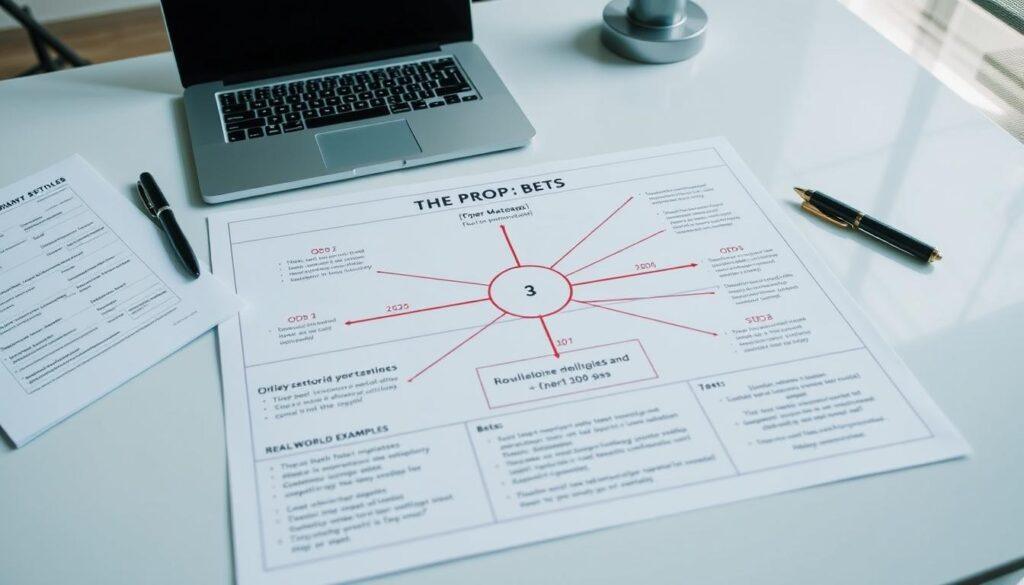
Think of it like Nate Silver analyzing swing states. The odds on “player home run” props are worse than a congressional approval rating. Sportsbooks consider many factors, not just the game itself.
Sharp bettors often make three mistakes:
- Mistaking novelty for value: Betting on a “quarterback to throw 300+ yards AND propose mid-game” is more fun than smart.
- Ignoring sample sizes: Judging a basketball player’s rebounds from just three games is like polling 10 people.
- Chasing niche markets: Betting on Mongolian yak racing? It’s cute, but not profitable.
The Fairness Doctrine of responsible gambling practices is key. Set a budget and know when to stop. Use tools like:
- Deposit limits (your financial Iron Dome)
- Reality-check alerts (the bookie’s version of fact-checking)
- Self-exclusion programs (the nuclear option for when you’ve become your own worst lobbyist)
Remember, sportsbooks have better data than the NSA. Your edge is discipline. Treat prop bets like absinthe—a little goes a long way. Now, I need to check if Shohei Ohtani’s dog has MVP odds this season… strictly for research.
Conclusion – Becoming Odds-Literate
Learning sports betting odds is like understanding political polls. The numbers tell us things many miss. We’ve explored different odds formats and how to read them.
Knowing odds well sets you apart from casual bettors. It’s not just about knowing point spreads. It’s about understanding the odds like Nate Silver does with election data.
Remember, every -110 line has a hidden tax. And +500 underdogs might be long shots, like Bernie Sanders. This knowledge helps you make smart bets.
Use this knowledge wisely. Treat your bankroll like a limited term in Congress. Set limits before you lose everything. Apps like OddsChecker help you keep track of odds changes.
The key is to spot when Vegas changes odds to influence betting. Like Rachel Maddow, you need to see through the tricks. Bookmakers fear smart bettors more than politicians fear retirement.
Always have 1-800-GAMBLER ready. In sports betting, knowing odds is your power. The house advantage is always there, but so is the power of knowledge. Now, read lines like you read the Federal Register – carefully and with a critical eye.