


Imagine a world where spreadsheets meet spreads, and point spreads become profit margins. This isn’t financial advice – it’s smarter. The same discipline that built Silicon Valley fortunes now fuels a growing movement among sharp-minded Americans. They treat game-day decisions like portfolio allocations.
Let’s cut through the casino fog. Every seasoned player knows three non-negotiable sports betting terminology essentials: unit sizing, value hunting, and mathematical edge preservation. Colorado’s 2022 haul – $271 million in legal operator revenue – shows millions play. But how many actually profit?
Here’s the uncomfortable truth: most recreational bettors handle their funds like crypto bros during a bull run. Yet, services like RebelBetting quietly help European users average €1,731/month through cold, calculated systems. The difference? Treating each wager like a stock trade – complete with stop losses and position sizing.
This isn’t about luck any more than poker is about card distribution. It’s about responsible gambling practices disguised as financial strategy. Why do 96% of casual players blow their stakes by December? They confuse entertainment budgets with investment capital.
The real game happens long before kickoff. It’s in the Excel sheets tracking ROI percentages, the algorithms calculating implied probabilities, and the self-control to walk away when variance strikes. Want to outplay the sportsbooks? Start by outthinking your own impulses.
What is Bankroll Management?
Think of your betting funds like a poker pro’s tournament chips. Instead of bluffing, you’re battling oddsmakers and your own impulses. Bankroll management is your strategic reserve, helping you play the long game, not just a short-term thrill.
Let’s break it down like blackjack: your total bankroll is the deck, each bet a card. Betting all in on every hand? You’ll run out of funds fast. Smart players separate their gambling funds from life money – your rent check isn’t for that 5-team parlay.
The Anatomy of a Bankroll
Three key components:
- Dedicated funds: Money you’d comfortably light on fire at a bonfire party
- Unit sizing: The Goldilocks principle of bet amounts (more on this below)
- Loss limits: Your personal “walk of shame” threshold
| Strategy | Key Principle | Risk Management Tip |
|---|---|---|
| Poker Tournament | Preserve chips for premium hands | Never risk >5% of stack |
| Blackjack | Basic strategy + bankroll divisions | 1% per hand rule |
| Sports Betting | Unit size consistency | 1-5% per play |
Think of your bankroll as a 12-pack of beer. Each unit is a single beer. You wouldn’t drink 10 IPAs before work, so why bet 10 units on a game? Pro tip: Most sharp bettors bet 1-5% of their total roll.
Remember, bankroll management isn’t about getting rich fast. It’s about staying in the game long enough to outlast the clowns betting their crypto profits. Your future self will thank you when you’re not eating ramen to fund next week’s action.
The Importance of Setting a Budget
Think of your betting budget as a financial safety net. It’s something you hope never to use, but it’s essential when March Madness turns sour. Unlike the rules in fantasy football, responsible gambling practices are a must in 2023. New Jersey’s 22% drop in problem gamblers shows that setting limits is key.
Your bankroll is not just a suggestion; it’s a rule for your wallet. While some treat their rent money like Monopoly cash, smart bettors follow US sports betting laws carefully. In states like Michigan, they know that reckless bets are illegal.
Here are some 2023 stats that show the difference between smart and reckless betting:
| State | Budget Tools Used | Problem Gambling Reduction | Unique Regulation |
|---|---|---|---|
| New Jersey | Deposit Limits | 22% | 24-hour reversal window |
| Michigan | Cooling-Off Periods | 18% | 72-hour mandatory break |
| Nevada | Self-Exclusion | 15% | Casino-wide bans |
Alan from The Hangover learned a hard lesson about budgets. Modern betting apps offer many safety features. But the real key is to treat your betting amount with respect and flexibility.
Budgeting isn’t about cutting out fun. It’s about being smarter than the part of you that thinks 3 AM bets are a good idea. As every casino security chief knows, “The house always wins… unless you bring your own rulebook.”
Unit Size, Flat Betting, and Staking Systems
Think of your betting strategy like a Wall Street portfolio. Flat betting is like an index fund—it’s steady and reliable. But staking plans are like day-trading, where fortunes can change quickly. Let’s explore how to manage your bankroll, because betting is a lot like physics.

Confidence-Based Betting
Imagine seasoning a steak like a chef. You don’t add too much salt because you think it needs it. That’s the 1-3 unit system in action. Pros use units like seasoned chefs:
- 1 unit: “This game smells like my leftovers from Tuesday” (low confidence)
- 2 units: “I’d bet my morning coffee on this” (moderate conviction)
- 3 units: “This pick is clearer than my VPN connection” (lock alert)
The Martingale system is like the 2008 housing crisis. Doubling down after losses can work until your bankroll crashes.
Percentage Play vs Fixed Units
Percentage players adjust like a thermostat, while fixed-unit bettors are like metronomes. Which one wins? Let’s compare:
| Strategy | Risk Profile | Best For | Growth Potencial |
|---|---|---|---|
| Percentage Play | Dynamic (scales with bankroll) | Volatile markets | Exponential gains |
| Fixed Units | Static (set $ amount) | Consistency seekers | Linear growth |
| Confidence Staking | Variable risk | Sharp handicappers | Hybrid approach |
Using fixed units is like driving a Toyota Camry—it’s safe and predictable. Percentage betting is like a Tesla on Autopilot, with surprises. Choose based on your love for rollercoasters or carpool lanes.
Remember our bar joke? If 2% of your bankroll bets on a 3:1 scenario, you win 6% or lose big. That’s sports betting in a nutshell—a numbers game with Vegas flair.
Risk of Ruin: How Not to Go Broke
Imagine your betting account as the last Twinkie in a zombie apocalypse. How long will it last against bad odds and poor decisions? This is risk of ruin in action. It’s the chance your bankroll will disappear like Blockbuster Video.
It’s like climate change models for your wallet. Monte Carlo simulations show how small risks add up. Your $500 bankroll is not just one bet. It’s a whole system. Would you drain Lake Michigan for a Slurpee?
Here’s the apocalypse equation even Rick Grimes could use:
- Risk of ruin = (chance you’ll check DraftKings balance mid-shower) × (urge to Venmo Mom for rent)
- Translation: Bankroll / (Bet Size × Odds Quality) – Self Control²
Let’s get practical. Open Excel and type:
=ROUND((B2/C3)/D4,2)
Where B2 is your life savings, C3 is your confidence in the Jets covering, and D4 is how many times you’ve rewatched Moneyball. (Pro tip: Actual formulas exclude hope multipliers.)
Modern bankroll calculators are like Batman’s utility belt. They use probability curves. Just input your stake size, win rate, and odds. The output? Whether you’ll be on vacation or explaining your “investment strategy” to a payday loan officer.
Remember: Managing risk of ruin isn’t about avoiding losses. It’s about surviving long enough for variance to stop being a backstabbing frenemy. Even Black Monday investors bounced back – but only those who didn’t bet their dialysis machine on parlays.
Are you using pen-and-paper calculations? Congratulations – your risk management strategy is as current as AOL dial-up. Today’s tools analyze more scenarios than a Marvel multiverse. Your move, abacus enthusiasts.
Emotional Control and Chasing Losses
Sports betting psychology works like dating apps, using our brains’ love for rewards. This “swipe-right mentality” turns smart bettors into gamblers chasing dopamine. Source 3 shows 90% of bettors win early but lose long-term. Why? It’s because of how our brains work.
Parlay bets are like lottery tickets in disguise. They promise big wins but actually lose money. Let’s look at casino math:
| Bet Type | Win Probability | House Edge | Emotional Payoff |
|---|---|---|---|
| Single Bet | 48% | 4.5% | Mild excitement |
| 3-Leg Parlay | 11% | 23% | Adrenaline rush |
| 5-Leg Parlay | 2.5% | 41% | Delusional life-planning |
This isn’t investing; it’s a tax on desperation. Kahneman and Tversky showed we overvalue small chances. Chasing losses makes us believe disaster won’t happen to us.
Three traps keep us in this cycle:
- Loss Aversion: Losing $100 hurts 2x more than winning $100 pleases
- Hot-Hand Fallacy: Believing random wins form “streaks”
- Sunk Cost Fallacy: Throwing good money after bad decisions
The fix? Bet like a chess grandmaster, not an emotional gambler. Set daily loss limits like Vegas casinos. When tempted by parlay bets, ask: “Am I buying value or hope?” Your bankroll will appreciate it.
Software & Tools for Tracking Bets
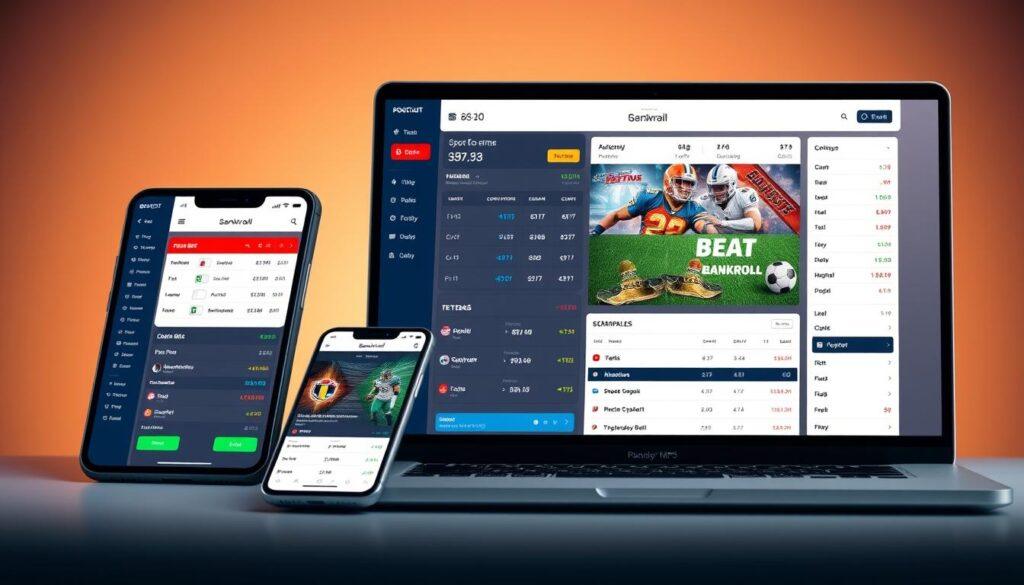
Tracking bets in your iPhone Notes app is like trying to write stock prices on stone tablets. In 2024, you need better tools. Sports betting apps bring together spreadsheets and AI, helping you keep track of bets without getting lost.
Manual trackers are like holding onto Excel files for dear life. But, they can’t adjust for live odds or calculate implied probability while you sleep. Apps like RebelBetting offer a profit guarantee, tracking your betting success like a fitness tracker.
Here’s why futures bets need special tools:
- Olympics long-game wagers require tracking 200+ athletes across 33 sports
- Kentucky Derby prep races span 18 months before the big race
- Political prop bets need real-time polling data integration
| Feature | Manual Tracking | Spreadsheets | Sports Betting Apps |
|---|---|---|---|
| Automatic Odds Tracking | ❌ (RIP, carpal tunnel) | 🟡 (If you’re a coding wizard) | ✅ Real-time updates |
| Futures Management | 🟡 (Post-it note graveyard) | 🟡 (Conditional formatting hell) | ✅ Visual timelines |
| Bankroll Analytics | ❌ (Guessing game) | 🟡 (Pivot-table purgatory) | ✅ AI-powered insights |
RebelBetting’s system is like having a crystal ball with receipts. It checks 45 sportsbooks at once, finding exact hedge opportunities. It’s like having Nate Silver manage your parlay tickets, minus the awkward talk.
For those tracking Super Bowl futures manually: it’s like baking sourdough without a starter. Modern tools analyze betting patterns and predict when you might lose money. The question is, can you afford to keep using your Notes app?
Bankroll Building: Growth Methods Over Time
Warren Buffett called compounding the eighth wonder of the world. He might have been talking about NFL props. It’s like treating your sportsbook account like a Roth IRA, growing your money with calculated prop bet strategies.
A 30% monthly ROI might sound like fantasy football math. But here’s the twist. If you turned $1,000 into $1,300 with prop bets explained as small investments, you’re dollar-cost averaging. You don’t need Mahomes’ arm – just his fourth-quarter stats.
Smart bettors use three growth accelerators:
- The 2% Rule: Grow your bankroll 2% weekly with low-risk props. This beats Wall Street’s averages, though Caesars Palace is out of reach.
- Odds Arbitrage: Find differences in sports betting odds across books. It’s like a day trader looking for penny stock gaps.
- Reinvestment Triggers Only compound 50% of profits. This keeps you playing while building your bankroll.
Remember DraftKings’ +800 on “Gatorade color matches team’s secondary logo”? That’s not gambling – it’s cultural analysis as probability math. The trick is finding these soft-prop opportunities where sports knowledge beats algorithms.
Pro tip: Watch your growth rate like a Fed chair watches inflation. If your bankroll grows more than 5% weekly, ask if you’re getting smarter or just lucky? (Spoiler: Vegas wasn’t built on luck).
Adapting Bankroll Management to Your Goals
Think of bankroll management like choosing your difficulty level in a video game. You wouldn’t tackle Dark Souls boss fights with a “casual mode” strategy. Your betting goals determine whether you’re playing Candy Crush or competing in the World Series of Poker. Let’s break this down with the precision of a chess grandmaster analyzing their ELO rating.
Here’s how to tier your approach:
- Pawn Tier (Weekend Warriors): Allocate 1-2% per bet. You’re saving for that PS5 – slow, steady wins the race.
- Knight Tier (Strategic Players): 3-5% stakes. Now we’re eyeing that Tesla Model S, using calculated risks like futures bets on season-long outcomes.
- Queen Tier (High Rollers): 5-10% wagers. You’re not just playing the game – you’re rewriting the odds. Requires ninja-level mastering bankroll management skills.
Source 3’s bankroll cycling strategy works like a hedge fund manager’s playbook: Reinvest 50% of profits, pocket 30%, and keep 20% as emergency ammo. It’s the financial equivalent of upgrading your armor before charging into battle.
When your state legalizes mobile betting (looking at you, New York and Florida), remember: This isn’t tailgate party roulette. Adjust your strategy like switching from Fireball shots to craft cocktails – slower, smarter, and with actual measuring tools. Regulatory changes mean more opportunities, not excuses to YOLO your rent money on parlays.
Pro Tip: Your approach to understanding sports betting odds should evolve with your bankroll. What worked when you had $500 won’t cut it at $5,000. It’s like using bicycle tactics in a Formula 1 race – amusing to watch, disastrous for your wallet.
So – are you playing checkers when the market demands chess masters?
Real-World Success Stories & Cautionary Tales
Hollywood makes high-stakes gamblers look glamorous, but real success is about spreadsheets, not movies. Emil made €11,000 in six months by betting flat and staying calm. He treats parlay bets like something very dangerous.
On the other hand, there’s the “40-Year-Old Virgin” bettor who bets $500 on a 7-team parlay. Sounds good, but it never works out. A Vegas oddsmaker once said, “The house builds casinos on seven-leg parlays, not retirement funds.”
Legends vs. Lawsuits: A Betting Behavior Breakdown
| Strategy | Risk Approach | Outcome | US Legal Impact |
|---|---|---|---|
| Billy Walters’ Arbitrage | 1-3% bankroll stakes | $100M+ profit | Legal until insider trading charges |
| FanDuel Super Bowl Promos | Unlimited free bets | $58M FTC fine | Changed US sports betting laws on bonuses |
| Emil’s Flat Betting | 2% per play | 27% ROI | Compliant in 38 states |
US sports betting laws are full of traps for the unwary. The DraftKings lawsuit was about bad math in bonuses. If you need 12 tabs and a VPN for your betting strategy, you’re in trouble.
Good bankroll management is key to success. My Vegas friend says, “The difference between me and the guy crying at the sportsbook? I know when to bet cereal money versus college fund money.” Make smart choices.
Conclusion – Key Habits for Smart Bettors
Think of bankroll management as the oxygen mask of sports betting: secure yours before shouting hot takes into the void. The math doesn’t care about your gut feeling or that “lock” your cousin texted you. Real success lives in the mundane—tracking every $50 median bet like it’s a Fortune 500 stock, because over 3,000 wagers, that 5% ROI separates strategists from sob stories.
Five truths your bookie’s algorithm won’t highlight: (1) Your unit size isn’t a flex—it’s a firewall. Stick to 1-5% of your bankroll, even when LeBron’s prop bets whisper sweet nothings. (2) Spreadsheets are sexier than parlay tickets. Tools like Covers’ bankroll guide reveal cold metrics beating hot streaks. (3) “Chasing” isn’t a strategy—it’s a Netflix documentary title waiting to happen. (4) Adjust your staking like a chef seasons a dish—taste-test, don’t gut-check. (5) Sports betting terminology like “risk of ruin” matters more than knowing the backup QB’s college stats.
This isn’t gambling—it’s probability gardening. Water your bankroll with responsible gambling practices, prune emotional bets, and watch compound interest do the heavy lifting. Teddy Roosevelt’s ghost would high-five the cold calculators: “The credit belongs to those in the arena… who sweat ROI percentages while others vomit hype.” Your move, sharpie.