
Welcome! Have you ever wondered how the sharpest sports bettors always seem to get the better number?
You’re in the right place. We’re going to demystify a core practice: comparing odds across multiple sportsbooks to find the most valuable price.
Think of it like having a super-powered, always-on personal shopper for your bets!
This constant odds comparison is what turns tiny price differences into a real, lasting edge. It’s the difference between a good bet and the best price available.
Doing this manually is slow and nearly impossible. That’s where automation shines.
Bots can handle the search, price checks, and monitoring for you. They save massive time and lock in better deals the moment they appear.
Here’s the critical part: real-time data isn’t a nice feature—it’s a requirement. For opportunities that vanish in seconds, latency is everything.
In this guide, we’ll walk you through building your own automated system. We’ll cover APIs for data, alerts for notifications, and the smart logic to tie it all together.
By the end, you’ll understand the entire stack. More importantly, you’ll know how to move from being a passive bettor to an active, informed shopper.
Let’s get started.
Why Line Shopping Wins
Automation makes line shopping fast and powerful. Imagine betting on sports. You check odds at one sportsbook, then another, and another. It’s slow and tiring, and the best price might be gone by the time you find it.
Now, think about modern line shopping automation tools. They work like bots that find products and prices online. They scan odds across all your sportsbooks in real-time, fast. This isn’t just checking sometimes; it’s always watching the market.
The main win is clear: superior odds mean higher profits. Every bad price you accept costs you money. An automated system finds better prices for every bet. It’s like always getting a discount.
Let’s look at the benefits. First, you save a lot of time and energy. The automation does the hard work. Second, you cover the market better. You catch chances you’d miss without automation. Third, you make decisions based on facts, not feelings.
To see the difference, let’s compare:
| Aspect | Manual Shopping | Automated System |
|---|---|---|
| Speed | Minutes to hours per check | Seconds for a full market scan |
| Coverage | Limited to 2-3 books realistically | Simultaneous checks across 10+ books |
| Consistency | Erratic, prone to human error | Relentless and precise 24/7 |
| Emotional Fatigue | High – a frustrating slog | Low – you just act on the best alerts |
This table shows why automation is key. The system finds the best alerts for you. You’re not overwhelmed with data; you get clear signals.
In short, line shopping wins by using information to your advantage. While others bet first, you find the best odds. This edge, thanks to automation, grows your bankroll over time. You stop guessing and start knowing.
Ready to keep more money? Building your own automated shopper is the next step. We’ll help you from start to finish, from APIs to alerts.
Edge from small price deltas across books
Think of sports betting like shopping for groceries. The same item can cost a few cents less at another store. Your edge doesn’t come from predicting the future. It comes from paying less for the same prediction! Sportsbooks have different opinions, creating tiny price differences, or “deltas.”
We call this process odds comparison. A line of -110 on one book versus -105 on another is a small delta. But over hundreds of bets, those saved cents turn into dollars. This is pure arithmetic advantage.
This concept is directly borrowed from retail. Just as a reseller profits from a hidden price gap between stores, a bettor profits from a hidden odds gap between books. It’s a simple, genius idea applied to sports.
You win by being an efficient shopper first and a forecaster second. Hunting these microscopic inefficiencies is the core of positive expected value (+EV) betting and arbing.
Let’s make the math crystal clear. The table below shows how small deltas create real money over a betting season.
| Bet Size | Odds Difference (Delta) | Vig Saved per Bet | Projected Annual Savings (500 Bets) |
|---|---|---|---|
| $100 | -110 vs. -105 | $2.38 | $1,190 |
| $50 | -115 vs. -110 | $1.09 | $545 |
| $200 | +100 vs. +105 | $4.88 | $2,440 |
| $150 | -120 vs. -115 | $2.90 | $1,450 |
See the power? You’re not relying on luck. You’re building a system. This foundational arbing principle turns betting from a guessing game into a calculated process.
Your mission is to find these deltas consistently. The next sections will show you the exact tools and rules to automate this odds comparison hunt. Let’s build your edge, one small delta at a time!
Stack Overview
Think of your line-shopping setup as a stack of tools working together. This “tech stack” is your automated pipeline for finding value. It collects data, makes decisions, notifies you, and helps you act—all with speed and precision.
Modern systems use a mix of APIs, automation tools, databases, and smart logic to work well. As one source says, “Real-time market data isn’t a feature—it’s a requirement.” Your stack makes this requirement real.
We can break this down into four clear layers. Each one has a specific job, and together they form a complete line-shopping machine.
- The Data Layer: This is where the numbers come in.
- The Logic Layer: This is where your brain lives.
- The Alert Layer: This is your personal notification system.
- The Action Layer: This is where you place the bet.
Let’s open up each layer and see what’s inside.
Odds APIs & Data Feeds
The foundation is the Data Layer. You need a fast, reliable stream of odds from multiple sportsbooks. The best way to get this is through an odds API.
An API (Application Programming Interface) is a clean, direct channel for software to request data. It’s like a dedicated news wire for prices, delivering structured information you can use instantly. For books that don’t offer a public API, some builders use web scraping—a method that automatically reads website data—though this can be more fragile.
Whether via API or scraping, this layer’s sole job is to gather raw odds and pour them into the next stage of your system.
Google Sheets/Excel: The Logic Hub
Next is the Logic Layer. This is often a familiar spreadsheet like Google Sheets or Microsoft Excel. It’s the control center where raw data becomes insight.
Here, you’ll normalize the data (so a -110 from Book A and a 1.91 from Book B can be compared), apply your de-vigging math to find the true odds, and run calculations to spot discrepancies. You can set up simple formulas or more advanced scripts to flag opportunities automatically.
The beauty of using a spreadsheet is its flexibility and transparency. You see every calculation, which is perfect for learning and tweaking your model.
Mobile Alerts for Instant Notices
You can’t stare at a spreadsheet all day. The Alert Layer solves this. When your Logic Layer identifies a qualifying opportunity, it triggers a notification straight to your phone.
This is where automation truly shines. You can set up alerts via SMS, email, Telegram, or Discord. The goal is instant awareness. These mobile alerts are your signal to check the situation and move to the final layer: execution.
Good alert rules balance urgency with relevance, so you’re not bombarded with spam for tiny, unactionable differences.
Bankroll Connectors & Fast Action
The final piece is the Action Layer. Speed is critical once you have an alert. This layer involves quick funding methods and, for advanced users, software sometimes called bankroll connectors.
These tools help manage your stake across different sportsbooks, tracking your balance and exposure. While manual execution is common for beginners, this layer represents the peak of automation—integrating the entire process from discovery to bet placement.
For now, focus on having fast funding options ready (like debit cards) and a clear plan for when you get that alert. The stack has done its job; now it’s your turn to act.
Setup Guide
Building your line-shopping system is like picking a car for a long trip. It depends on who’s driving and the road ahead. Think of your technical skills as the driver and the betting world as the road. We’ll guide you to the right car and show you how to start.
You have three main paths to choose from:
- The Custom Code Roadster: For the driver who loves to tinker under the hood and build for pure speed.
- The Spreadsheet Family SUV: Reliable, familiar, and powerful enough for most journeys with the right add-ons.
- The No-Code Connector Minivan: Easy to drive, connects all your favorite spots without needing a mechanic’s license.
If you’re good with code, the Custom Code path is for you. You can write a Python script to call multiple API endpoints directly. This lets you parse data in real-time and send custom alerts via SMS or Discord. It’s great for complex arbitrage logic or handling high volumes. But, it needs ongoing maintenance and programming skills.
Prefer a visual interface? The Spreadsheet Wizard approach is very effective. You can import live odds data through add-ons or built-in functions in Google Sheets or Excel. Once set up, the sheet updates automatically. You can highlight value with conditional formatting and send email alerts with simple scripts. It’s a great way to see all your data side-by-side without coding.
For those who want automation without complexity, the No-Code Connector route is a game-changer. Platforms like Zapier or Make (formerly Integromat) act as glue. You can set up a “Zap” that watches for new odds data and sends you a mobile push notification or populates a table. It’s the quickest way to get a basic, hands-off alerts system running in an afternoon.
Your first step on any path is the same: gather your keys. This means signing up for accounts with the data providers or sportsbooks you plan to monitor. Start with just two or three to keep it simple. Then, choose one path and follow its basic “hello world” tutorial. Make one API call, import data into one spreadsheet cell, or build one no-code trigger. Small wins build confidence and momentum for the more complex logic we’ll add later!
Pick books/exchanges; normalize formats; handle delays; de‑vig logic
Let’s get started on setting up your automated price alerts. This is where your system turns raw numbers into useful insights. Think of it as building your car’s engine—the setup guide gave you the chassis, now we’re adding the parts that make it run.
Getting this right is essential. A flaw in your data pipeline can mean missed opportunities or bad bets. We’ll cover four key areas: choosing sources, standardizing data, managing speed, and finding true value.
Pick Your Books and Exchanges
Your first choice is where to get odds from. Not all sportsbooks are good for our needs. You need a mix of reputable books with sharp lines and platforms that offer reliable data access.
Focus on books that serve your target state and have either a public API or a website structure that’s consistent and scrapable. API access is king for speed and reliability, but for many books, web scraping is the only way. This is where automation scripts come in. These bots follow set rules to browse sites and collect data like prices and lines.
Here’s a quick checklist for picking your sources:
- Major U.S. Operators: DraftKings, FanDuel, BetMGM, Caesars. They have sharp lines and often predictable web structures.
- Exchanges: Betfair Exchange or Matchbook. They offer true market prices, which are fantastic for comparison.
- API Availability: Check if the book offers a direct odds feed. This is your fastest, cleanest data source.
- Scraping Friendliness: Avoid sites with heavy anti-bot tech (like Cloudflare) unless you’re ready for a technical challenge.
Normalize Formats: Speak the Same Language
Once you collect data, you’ll face a tower of Babel. One book uses American odds (-110), another uses Decimal (1.91), and a third might show implied probability (52.4%). To compare them, you must convert everything to a single standard.
We recommend converting all odds to implied probability percentage. It’s the universal translator for betting value. Here’s a simple conversion table to keep handy:
| Format | Example | Implied Probability |
|---|---|---|
| American (-) | -110 | 52.38% |
| American (+) | +200 | 33.33% |
| Decimal | 1.91 | 52.36% |
| Fractional | 10/11 | 52.38% |
Your automation script or spreadsheet needs built-in formulas to perform these conversions instantly. Without this step, you’re comparing apples to oranges.
Handle Delays: Don’t Bet on Stale Data
Speed kills in arbitrage. A price that’s 10 seconds old might be gone. You have two main data sources: fast APIs and slower web scraping.
API data is near real-time. Scraped data has latency—the time it takes for your bot to request a page, parse it, and extract the odds. This delay can be several seconds. Your system must account for this by:
- Timestamping every data point as it’s collected.
- Prioritizing bets from the fastest, most reliable sources.
- Setting wider alert thresholds for slower, scraped sources to avoid chasing ghosts.
If your API feed says -110 but your scraped data says -115 from three seconds ago, trust the API. Always know the age of your information.
De‑Vig Logic: Find the True Price
This is the most powerful step. Sportsbook odds include a built-in profit margin called the “vig” or “juice.” It’s why both sides of a market add up to more than 100%. If you don’t remove it, you can’t see which book is really giving you a good deal.
De-vigging means stripping out this margin to find the “true” implied probability. For a two-outcome market, you take the implied probabilities for both sides, normalize them to sum to 100%, and recalculate the fair odds.
For example, if a moneyline shows -110 (52.38%) and -110 (52.38%), the total implied probability is 104.76%. The vig is 4.76%. The true odds for each side are roughly 50%, or +100 in American format. Suddenly, a book at -105 looks much better than one at -110!
Implementing this de-vig logic in your spreadsheet or code is what separates sophisticated line shopping from simple price checking. It reveals the actual edge.
Alert Rules
The real power of your automated setup is knowing when to act. Alert rules are smart filters that turn data into real opportunities. They help you focus on what’s important.
Think of it like a traffic light system for your bankroll. Most price movements are steady, like a green light. But when a condition you’ve set is met, the light turns red. Then, your automation sends you a clear signal. This is what makes you an active advantage-seeker, not just a passive data collector.
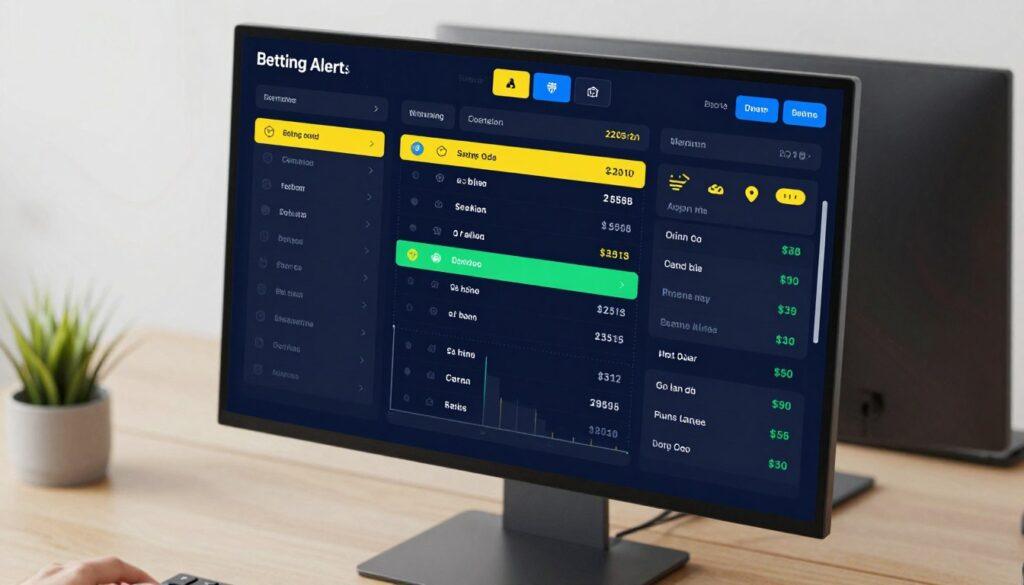
Good rules filter out the noise so you only see what matters. You don’t want a notification for every small market change. Instead, you want clear, actionable intelligence. Here are some common and effective alert triggers you can set up:
- Price Delta Alert: “Notify me if Book A’s moneyline is at least +15 cents better than the consensus price across my other books.”
- Arbitrage Window Alert: “Send a mobile notification if a two-way arb opportunity with over 1.5% guaranteed ROI is detected.”
- Line Movement Alert: “Alert me if the point spread on a key game moves by more than half a point in under 60 seconds.”
- Market Open Alert: “Trigger an alert when a new player prop market opens for a star player, giving me first-mover advantage.”
Creating these rules needs a balance. If you set the threshold too tight, you’ll get too many minor opportunities. If it’s too loose, you might miss the best chances. Start with a conservative setting and adjust as needed.
This layer of automation brings your system to life. The APIs fetch the data, and your sheet crunches the numbers. But the alerts put you in control. They make sure you’re notified right when your edge appears, not after it’s gone.
Thresholds by Market: The Fine Line Between Profit and Noise
Finding a better price is one thing; knowing when that price is good enough to act on is where the real skill lies. Your alerts are only as valuable as the rules they follow. Setting the right thresholds turns a flood of data into a stream of golden opportunities.
This is the art of balancing greed with practicality. Too strict, and you miss out. Too loose, and you’re overwhelmed. The right threshold defines your personal best price for every single bet.
Thresholds by Market: From Tight to Tolerant
Not all markets are created equal. Efficient markets, like NFL point spreads, have razor-thin margins. Here, you might set a very tight filter—only alerting you if you beat the projected Closing Line Value (CLV) by, say, 10 basis points (0.10%). That small edge, compounded over time, is pure profit.
In less efficient markets, you can be more tolerant. For a niche player prop or a baseball moneyline, an alert for a price that’s +5 cents better than the consensus might be your trigger. These apps provide critical data on pricing trends, helping you make these informed decisions for each sport.
Your goal is to maximize profitability by only acting when the edge is meaningful for that specific contest. The table below offers a starting point for thinking about market-specific thresholds.
| Market Type | Sample Threshold | Rationale | Friction/Spam Risk |
|---|---|---|---|
| NFL/NBA Sides (Spreads) | +8 to +12 bps vs. CLV | Highly efficient; need a clear, sharp edge to overcome vig. | High friction risk (missing good lines) if set too high. |
| MLB/NHL Moneyline | +3 to +7 cents | Greater inherent variance allows for slightly softer lines. | Balanced; moderate settings catch value without spam. |
| Player Props (Points, Rebounds) | +5 to +15 cents | Less efficient, softer lines; specially on smaller books. Learn more about softer lines in player prop markets. | High spam risk if threshold is too low. |
| Live Betting Arbs | +2% or more | Fast-moving market; threshold must justify rapid execution risk. | Very high spam risk due to market volatility. |
Managing Friction vs. Spam
This is your daily battle. Spam is alert fatigue—your phone buzzing constantly with low-value opportunities. You’ll start ignoring it, and that’s how you miss the big one. Friction is the opposite: your thresholds are so high that great chances never make it to your screen.
Your sweet spot is in the middle. Start with the guidelines above, then adjust based on your volume. If you’re getting 50 alerts a day and only 2 are good, raise your thresholds. If you feel like you’re missing obvious arbing spots, lower them slightly. It’s a dynamic process.
Remember, the data is there to empower you. By fine-tuning these gates, you control the flow. You decide what constitutes your best price, minimize distraction, and position yourself to capture true value when it appears.
Execution Tactics
Execution is key between spotting an opportunity and making a profit. You’ve got the alert—now act fast! This phase is your guide to turning a signal into profit.
Think of it like a race where milliseconds matter. The price you saw can change or disappear. Your entire line-shopping system is ready for this moment.
Let’s look at your execution plan. Success here needs preparation and a clear action sequence.
First, Be Funded and Ready. This is essential. An alert for a perfect arb is useless if your betting account is empty. We’ll explore fast funding methods later, but for now, know you need cash ready.
Next, know the market’s limits. Sportsbooks have maximum bet sizes. If you try to place a $500 bet on a line that only has $200 of liquidity, you might get a “partial fill.” This means only part of your bet is accepted, which can completely ruin your arbing math.
So, what’s the right order of operations? Follow this sequence every time:
- 1. Bet the Underdog Side First. This is a golden rule. The underdog line (the plus-money side) is less liquid and can move faster. Lock it in immediately.
- 2. Then, Bet the Favorite. With the higher-profit underdog side secured, you now place the opposing bet on the favorite. This sequence protects your edge.
- 3. Confirm Both Bets. Before you celebrate, verify that both wagers are confirmed in your account history. Screenshots are your friend.
This is where automation meets human judgment. Full robotic check-out is complex and risky in sports betting due to changing terms. But, you can automate some steps to save time.
Some tools and browser scripts can fill your bet slip with a single click from an alert. This is like having a helper pre-fill your order form. The goal is to minimize the time between “ding!” and “bet placed.”
While advanced bots in e-commerce can add items to a cart and check out automatically, in betting, that level of automation is rare. Your role is to be the quick, decisive human in the loop. You review the alert, click the pre-loaded link, and confirm the bet.
Remember, speed in ordering and fulfillment is everything. A five-second delay can be the difference between a successful arb and a missed opportunity. Treat each alert as a fire drill—act with purpose and precision.
By mastering these execution tactics, you turn your smart shopping system into a profit engine. The edge isn’t just in finding the price; it’s in capturing it before it’s gone.
Fast funding, debit card vs ACH, limits, partial fills, avoiding gnoming risks
Your line-shopping setup is useless if you can’t act fast enough when an opportunity appears. The gap between a great alert and a booked profit is filled with practical logistics. Let’s ensure your execution is as sharp as your shopping.
The Logistics of Locking in Value
When your automation flags a price, you need to move. This involves getting money into the right sportsbook and placing the bet within your account limits. Getting any step wrong can turn a sure win into a frustrating loss.
First, consider funding speed. You typically have two main options:
| Funding Method | Speed | Best For |
|---|---|---|
| Debit Card | Instant or near-instant | Seizing time-sensitive opportunities. Essential for live betting arbs. |
| ACH/Bank Transfer | 1-3 business days | Building a baseline balance across books. Avoiding card fees. |
Cards are king for speed, but sometimes carry fees. ACH is free but slow. The smart play? Use ACH to maintain a working balance in each book, and have a card ready for instant top-ups when a major alert fires.
Next, you must know your limits. Every book has a maximum bet size, which can vary wildly by sport and market. Your alert system should ideally check for available limits. There’s no point getting excited about a +200 line if the book will only let you bet $10 on it.
This brings us to two critical execution risks: getting “gnomed” and receiving partial fills.
Getting gnomed is when a sportsbook shows a fantastic price but only for a tiny, unprofitable stake. You place the bet, but the profit after fees is negligible. It’s a tease. To avoid this, know which books are notorious for low limits on sharp lines.
A partial fill is more common on betting exchanges. You try to place a $500 bet, but only $150 gets matched at the good price. The rest might get filled at a worse price or not at all, leaving you with an unbalanced, risky position. This is similar to a trading bot failing because the website layout changed—your automation plan didn’t account for a real-world execution snag.
So, how do you avoid these pitfalls? Pre-planning is everything.
- Maintain Balances: Keep operational funds in your top 3-4 books. You shouldn’t be funding from scratch during an alert.
- Know the Policies: Research which books have low limits or slow ACH times. This should influence where you shop first.
- Have a Plan B: If your first choice of book fails (gnomed, limit hit, site error), know your immediate next-best option from your shopping list.
By managing these funding and limit factors, you turn your sharp price discovery into reliable, executable profit.
Mini‑Arb & Middling
Your line-shopping system is more than just finding better prices. It’s a tool for finding guaranteed profits. Let’s explore mini-arbing and middling, two advanced strategies. These methods use your odds comparison skills to make money safely.
Think of these as advanced tools in your kit. They need more precision but offer clear advantages. Here’s the main difference:
- Mini‑Arbing (or “Arbing”): This involves betting on all possible outcomes of an event at different sportsbooks. It’s about finding a price mistake and collecting the difference.
- Middling: This strategy bets on both sides of a point spread, but at different numbers. You win if the score is between the two numbers you bet. It’s a bet on the margin of victory.
When using mini-arbing and middling, you think like a financial trader, not just a sports fan. These strategies are more about spread trading than knowing the game. You’re using numbers to find and exploit price differences, like a trader does with stocks.
This is the best use of odds comparison. A good shopping sheet can find these arbitrage situations for you. It shows when the odds suggest a guaranteed profit.
But remember: These strategies are not without risks. They require:
Quick calculations to ensure profit. Fast action to beat changes in odds or book limits. And knowing that if one bet doesn’t go through, you’re left with a risky single bet.
Mastering these strategies can turn your shopping system into a profit maker. Next, we’ll look at how to spot and manage these opportunities.
How to detect; hedge math; tax/settlement considerations
Your line-shopping system’s real power shines when it automatically flags a genuine arbing opportunity, not just a minor price difference. This section breaks down the detection logic, the precise math to lock in profit, and the key real-world considerations you must account for.
From Price Deltas to Locked Profit: Detection and Hedge Math
So, how does your setup know it has found a true arb? It’s not just about which book has the higher number. The core mechanism involves calculating the implied probability for each outcome across all your connected books.
Here’s the simple, powerful rule: after stripping out the vig (the book’s built-in profit margin), if the sum of the implied probabilities for all possible outcomes is below 100%, you’ve hit the jackpot. That gap represents your guaranteed profit margin.
Think of it like a retail arbitrage tool scanning product prices. Your system is doing the same for odds, providing a real-time profit calculation. Once detected, the next step is hedge math.
Hedge math is the formula that tells you exactly how much to bet on each side to ensure the same payout, no matter who wins. Your spreadsheet or app should handle this instantly, but it’s good to understand the principle:
- Calculate Payout from First Bet: Determine your total possible winnings if you place the initial (best) bet.
- Solve for the Hedge Stake: The stake on the opposite outcome is calculated so that the payout from the hedge bet equals the total amount you risked across both bets, plus your target profit.
This creates a perfectly balanced position. Your profit is locked in the moment both bets are placed, turning market noise into a safe, mathematical win.
Don’t Get Blindsided: Tax and Settlement Considerations
Here’s where many new arbitrageurs get a nasty surprise. The mechanics of arbing can create a complex paper trail for tax purposes. In the United States, sportsbooks report each winning bet as individual income to the IRS.
Consider this: you might arb for a net profit of $20. But if your winning leg pays out $1,020 while your losing leg costs $1,000, the sportsbook will report $1,020 in earnings. You must itemize to show your $1,000 loss to arrive at the $20 net.
This makes meticulous tracking non-negotiable. Log every single bet—the stake, the odds, the book, and the outcome. Come tax season, this log is your financial shield.
Remember, the true best price is the one that leaves you with the most money after all costs: the vig, transaction fees, and yes, your tax liability. A slightly smaller arb with simpler settlement might be better than a complex one that creates accounting headaches.
By mastering detection, hedge math, and these logistical realities, you transform your line-shopping from a hopeful search into a precise profit-engine. You’re not just finding better odds; you’re executing a financially sound strategy.
Compliance & Safety
The smartest bettors know that true edge comes not just from finding value. It also comes from protecting your ability to act on it. This is where compliance and safety become your most important strategic assets.
We’re big advocates for smart automation. It gives you a powerful information advantage. But, this power must be used within the framework set by the sportsbooks themselves. Your first step is to thoroughly read the Terms of Service (ToS) for every book you use.
The ToS is like the rulebook. Some websites clearly prohibit the use of bots or automated data collection scripts. Using one, even for personal line shopping, can lead to account restrictions or outright bans. This isn’t a minor detail—it’s the foundation of a sustainable system.
So, what’s the safe path? Always prefer using official APIs when a sportsbook provides them. These are the sanctioned channels for data access. If an official API isn’t available, your approach to automation must be ethical and low-impact. This means reasonable data polling rates and using data purely to inform your own betting decisions.

Your goal is enhanced betting intelligence, not trying to exploit or overload a platform. Transparent, respectful automation is far more likely to keep you under the radar and your accounts in good standing. We want to build a system that lasts for years, not one that gets shut down in weeks.
The “safety” side of this equation is just as critical. When you use APIs or any connected tool, you’re handling sensitive access keys and personal data. Treat your API keys like the password to your bank account—because that’s exactly what they are. Never hard-code them into public scripts or share them. Use secure environment variables or dedicated secret managers.
By marrying smart compliance with diligent safety, you protect both your bankroll and your long-term access to the markets. This disciplined approach ensures your line-shopping system is a reliable engine for profit, not a source of preventable risk.
ToS, state rules, VPN myths
Before you start betting, you need to know the rules. Running a line-shopping system is more than just finding price differences. It’s about following the rules set by sportsbooks and the law. Breaking these rules can limit or ban your accounts, making your tech edge a costly error.
Let’s look at the three main rules: the sportsbook’s Terms of Service (ToS), state gambling laws, and VPN myths. Understanding these protects your money and keeps your system running smoothly.
ToS and State Rules
The sportsbook’s Terms of Service is like a contract you can’t ignore. Ignorance is not an excuse. It has rules about data collection and automated activity. Most books say no to aggressive web scraping or using bots to get odds.
Sportsbooks fight to protect their sites. They use CAPTCHAs, rate limits, and behavior checks to block bots. If your script is too aggressive or looks automated, you’ll get caught. So, it’s important to use polite, slower request rates for your web scraping.
State laws also matter. Online sports betting laws vary a lot in the U.S. You can only bet where it’s legal for you to do so. Your location at the time of betting is key. Betting from a banned state can close your account and lead to legal issues.
VPN Myths
Many think a VPN is a magic solution. A common myth is that it lets you bet from anywhere or hide your alerts and scraping. But the truth is less exciting.
Sportsbooks can spot VPNs easily. Using one to bet from anywhere is against their rules and will likely get you banned. Also, a VPN adds delay, which is critical in line shopping. That delay can ruin your chance before your alert even reaches you.
Don’t rely on a VPN to bypass rules. Build a compliant system from a legal location. It’s the only way to succeed.
Case Study
Alex, a bettor, was fed up with manually checking sportsbooks for the best odds. It was slow and often missed good deals. So, he created a simple system in Google Sheets to compare odds automatically.
This system used odds APIs to find the best prices. It was like a smart shopper that checks all stores at once. Alex focused on NBA player props, where prices often change.
One night, the system alerted Alex to a great deal. A player’s points total was +105 everywhere, but one book offered +120. That’s a 15-cent difference.
By acting fast, Alex bet at +120 instead of +105. This small difference adds up over time. It’s a way to make more money in the long run.
But the real magic was in the scale. In just one week, Alex’s system checked thousands of lines. It found 15 great deals like the NBA prop. Here’s how it impacted his betting:
| Metric | Value | Impact |
|---|---|---|
| Total Lines Scanned | ~8,400 | Comprehensive market coverage |
| Alerts Generated | 15 | High-signal, low-noise output |
| Actions Taken | 15 | 100% alert conversion rate |
| Avg. Price Improvement | +8 cents | Direct vig savings per bet |
| Estimated Weekly ROI Lift | +3.2% | Measurable profit increase |
This mirrors how e-commerce works. You find a product and sell it where you make the most money. Automated odds comparison does the same. It turns random luck into a steady profit.
Alex’s story shows you don’t need fancy tools to win. A simple system for finding the best price can make a big difference. Your Google Sheet could be your most valuable tool.
Build a sheet; hit three live opportunities
Ready to see your edge in action? We’re about to create a live dashboard that catches price discrepancies as they happen. This hands-on section moves you from spectator to operator. You’ll build a simple but powerful monitoring tool and then use it to capture real value.
Think of this sheet as your personal trading desk. It continuously scans the market, applies your rules, and flags only the bets worth your time. The automation handles the tedious watching, so you can focus on executing.
Build a Sheet
Let’s start with the foundation. Your goal is to create a Google Sheet that pulls in live odds data, compares them, and highlights opportunities. Here’s your step-by-step blueprint.
Step 1: Connect Your Data Source
You need a live feed of odds. You have two main options: using a dedicated odds API or setting up a web scraping service. An API is more reliable and structured. Services like Odds API can feed data directly into your sheet with a simple function.
For a more DIY approach, you can use Google Sheets’ IMPORTDATA function or add-ons like Apipheny to pull data from websites. This is a form of web scraping. Define the specific product names, game URLs, or bet categories you want to track, just like setting up a product filter in an e-commerce bot.
Create columns for: Sportsbook Name, Game, Bet Type, Current Odds, and Your Calculated Fair Odds. Add a column for your “Target Price” or threshold. This is where you set your filters, like a minimum price delta of +5 cents or a 10 bps CLV edge.
Step 3: Set Up Your Alert Engine
This is where the magic happens! Use a simple formula to compare the “Current Odds” column with your “Target Price.” Then, apply Conditional Formatting to the row. If the current odds are better than your target, make the cell turn green and display “ALERT.”
You’ve just told your sheet when to trigger an action. This level of automation means you can monitor hundreds of lines without lifting a finger—it’s like having a assistant that handles thousands of data points in a fraction of the time.
Hit Three Live Opportunities
Now, let’s simulate your sheet catching three classic opportunities. Watch how the alert lights up and what you do next.
Opportunity 1: The Moneyline Arb
Your sheet pulls odds for an MLB game. Book A has the Yankees at -120, while Book B has them at +110. Your formula instantly sees the arbitrage window. The “ALERT” cell flashes. You quickly place the two opposing bets, locking in a risk-free profit.
Opportunity 2: The Point Spread Middle
For an NFL game, Book X has the spread at -3.5 (-110), and Book Y has it at -2.5 (-110). Your sheet detects the two-point gap. The alert triggers. You bet both sides, knowing a final margin of 3 points gives you a middle win on both bets!
Opportunity 3: The +EV Price Discrepancy
On an NBA total, most books have the Over at -110. But your API feed shows one book with it at +105. Your sheet’s “Value” column calculates the positive expected value. The row highlights. You pounce on the +105 line before it disappears.
In each case, your automation did the hard work of monitoring and notifying. You provided the strategy and the swift execution. This is how theory becomes your most powerful personal tool.
KPIs
How can you be sure your odds comparison efforts boost your profits? The answer is in tracking Key Performance Indicators, or KPIs. These metrics help you move from guessing to data-driven betting.
KPIs act like your system’s report card. They show what’s working, what’s not, and where to improve. Without them, you’re just guessing. With them, you’re building a lasting edge.
Let’s look at the three key KPIs for any line-shopping system. Mastering these helps you make smart decisions and set competitive goals.
The Three Core Performance Metrics
1. % Best Price Achieved
This metric shows your success rate. It answers a simple question: “How often did I bet at the best odds?”
If you bet at a different book out of habit, you missed the chance. A high score means you’re using your system well.
2. Saved Vig Per Bet
This metric shows the value of your shopping. The “vig” or “juice” is the book’s commission. By finding better odds, you save on this tax.
If you bet at +100 instead of -110, you save 10 cents per dollar. This adds up to real money in your bankroll over time.
3. ROI Lift from Shopping
This is the ultimate profit measure. It compares your ROI with and without shopped lines.
A positive lift means your system is profitable. It shows your arbing efforts are paying off.
Here’s a simple table to track your KPIs. Fill it with your data to see your progress.
| KPI Metric | What It Measures | How to Calculate | Strong Target | Why It Matters |
|---|---|---|---|---|
| % Best Price Achieved | Execution discipline & opportunity capture | (Bets at Best Odds / Total Bets Placed) x 100 | > 70% | Shows you’re acting on the value you find. |
| Saved Vig Per Bet | Immediate cash value of shopping | Vig on default line – Vig on taken line (in cents) | > 5 cents per $ | Directly increases your effective bankroll. |
| ROI Lift from Shopping | Overall profitability boost | ROI (with shopping) – ROI (without shopping) | > 2% positive lift | Proves your entire system’s net profitability. |
Start tracking these KPIs for a week. You might be surprised by the results! This data is powerful. It helps you adjust your system for better results.
A low “Best Price” percentage might mean you need to fund faster. A low “Saved Vig” might mean you need more books. This is how you refine your process.
The goal isn’t perfection from day one. It’s measurable improvement. By focusing on these KPIs, you shift from hoping to knowing you have an edge. You’re not just looking for a best price; you’re building proof of lasting value.
% best price achieved, saved vig per bet, ROI lift from shopping
You’ve built your system. Now, it’s time to see how well it works. Tracking the right Key Performance Indicators (KPIs) makes your line shopping more effective.
Best Price Achieved Percentage
This is like your batting average. It shows how often you get the best price. Aim for 80% or higher on the markets you target. Every time you miss, you lose a bit of value.
Saved Vig Per Bet
This is the cash you save on each bet. Saving just $0.50 per bet might seem small. But it adds up a lot over many bets. This saving comes from your hard work in comparing odds.
ROI Lift from Shopping
This shows how much your system improves your profits. Imagine your typical ROI is 2%. If line shopping adds 1% in value, your ROI goes up to 3%. That’s a 50% increase in your profits! Tools like ProductChimp help you see your real profit after fees, making your decisions more confident.
By focusing on these three numbers, you change how you think. You’re not just placing bets. You’re running a data-driven operation focused on finding value through arbing and comparison. This professional mindset is what leads to long-term success, not just luck.