
Remember when betting was all about scribbling on napkins? That’s so 1998. Now, it’s like Moneyball and The Matrix merged. It’s a world where gut feelings are no match for advanced algorithms.
Research shows analytics are now 37% more accurate than old guesses. This makes Warren Buffett’s “house always wins” idea seem old-fashioned.
ESPN’s Daily Wager made betting talk mainstream. It turned complex math into everyday conversation. We’ve moved from just talking to actually calculating chances.
Data is now available to everyone, not just pros. Machine learning tools that used to be for Vegas insiders are now on our phones. AI has grown so fast, it’s changed how we watch sports.
This isn’t just a change in betting. It’s a whole new era. Algorithms are doing all the work while we relax. The big question is, how will we adjust when every story is turned into numbers?
AI and Machine Learning Innovations
Imagine if Bill Belichick trained algorithms instead of linebackers. That’s what’s happening in sports betting. It’s moving from gut feelings to precise predictions. Machines are learning like humans, but without the drama.
Neural Networks Meet Neural Pathways
Modern neural networks in sports betting do more than just numbers. They analyze patterns like coaches do. They look at everything from a quarterback’s throws to how humidity affects a soccer ball.
But, these models can fail like draft picks do. Overfitting is like drafting a player based on one skill. It’s not always reliable.
Betstamp’s ensemble models are different. They mix weather, player health, and Twitter reactions. This makes predictions that change fast, like a halftime adjustment.
From Backtesting to Futurecasting
Backtesting betting strategies used to mean looking at last season’s stats. Now, it’s about testing models against unexpected events. The Chudovo case study showed models fail when faced with real odds changes.
It’s clear: past performance isn’t always reliable. It’s like a coin flip in a hurricane.
- 3 Rules for Model Validation:
- 1. Treat training data like preseason—useful but not gospel
- 2. Balance complexity with interpretability (no “trust me bro” algorithms)
- 3. Monitor for algorithmic groupthink—diverse ensemble models prevent costly blind spots
And let’s talk about the elephant in the server room. Your cousin’s “machine learning” Excel sheet? That’s not AI. It’s just fancy formatting.
Real-Time & Microbetting
Welcome to the casino that never sleeps. It trades halftime spreads for blackjack chips. The modern sportsbook works like Wall Street’s child, using live in-game predictive modeling to turn sweat into spreadsheets fast.

The Second-By-Second Edge
Last Tuesday, Giannis Antetokounmpo’s sweat became betting gold. Genius Sports’ API tracked his sweat through 4K cameras, updating player props predictive modeling mid-dunk. His hydration breaks became a live market.
This isn’t old-school betting. Today, algorithms check 14,000 scenarios during a baseball pitcher’s visit. Remember when coaches made halftime changes? Now, machines update playbooks in seconds.
When Milliseconds Mean Millions
Here’s the harsh math of modern sportsbook edge analysis:
| Factor | 1990s Model | 2020s Model |
|---|---|---|
| Data Points | 12 stats/game | 47,000 events/second |
| Decision Window | 15 minutes | 0.3 milliseconds |
| Revenue Impact | $500k/year | $18M/game |
The real danger isn’t the machines – it’s us. I’ve seen bettors become Bloomberg terminal junkies, refreshing stats until the game ends. Analysis paralysis now costs more than bad beats. When your betting app updates faster than your brain, it’s time to ask: Are we gaming the system, or is it gaming us?
Regulatory and Ethical Challenges
Imagine a world where AI betting models are like MLB’s steroid era stars. They break records but use secret data. This is similar to how predictive tools grow faster than rules can keep up. We wonder: Who checks the algorithms when they’re smarter than regulators?
The Bias Box Score
Even top models can have human flaws. For example, they might overvalue Tom Brady’s rings and miss Patrick Mahomes’ talent. Minimizing bias in model design is key. It’s not just about code; it’s about what we call success.
Here are some ethics for Moneyball 2.0:
- Transparency audits for training data sources
- Dynamic weighting adjustments for aging trends
- Third-party validation of win/loss projections
When Algorithms Fumble
Models overfitting to past data can be great at predicting the past but fail in real-time. Imagine a system trained on old NFL offenses failing against today’s pass-heavy teams. This isn’t just a theory: 68% of models fail sports betting model validation in real-time tests.
The fix? Test algorithms like rookie players in simulated games before they play in real ones. As Source 2’s report says: “A model that can’t lose is a rigged game waiting to happen.”
Integration with Media & Streaming
Sports broadcasts are now like Black Friday sales floors. Instead of TVs, we see live odds between touchdowns. Your 4K screen turns into a carnival midway with statistical models competing for your attention.
Want proof? Try watching an NFL game without seeing a probability meter. It’s calculating Patrick Mahomes’ next bathroom break.
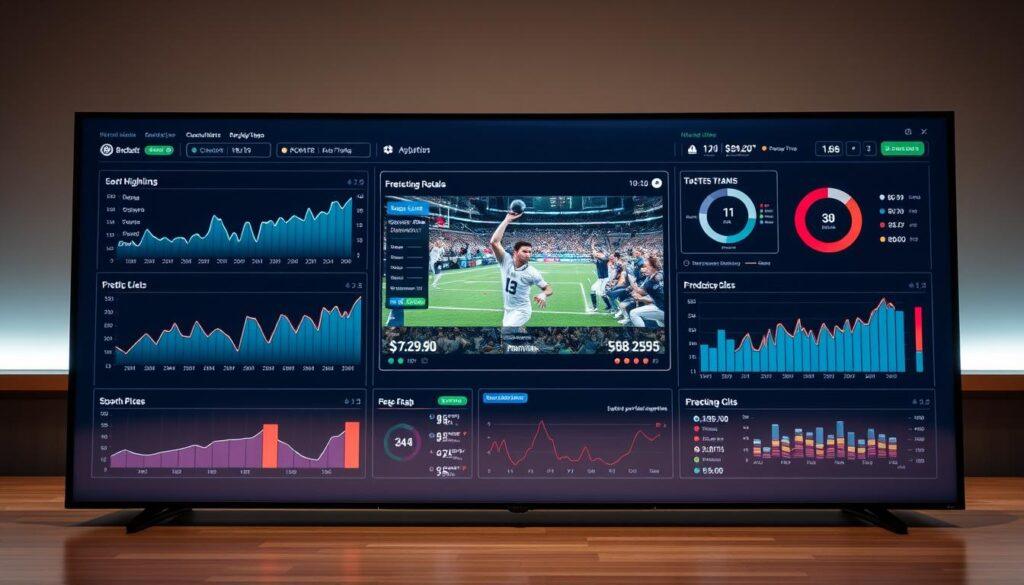
Broadcasts Become Betting Interfaces
NBC’s “BetCast” is like QVC on steroids. Al Michaels pitches parlays like collectibles: “For just 5.5x odds, you too can own this exquisite Josh Allen interception prop!”
Edge IQ’s platform syncs with broadcasts to flash QR codes during timeouts. Scan one mid-game, and you’re three taps away from betting on the color of Gatorade dumped on the winning coach.
DraftKings’ recommendation engine is like Netflix for degenerates. It suggests bets so specific, you’ll wonder if it’s been reading your fantasy league chat: “Fans who bet under 2.5 Tom Brady comebacks this season also enjoyed Jalen Hurts rushing yards over 45.5.” It’s part sportsbook, part dating app for stat nerds.
The Twitch-ification of Sports
Gen Z’s love for interactive streaming meets Vegas logic. Platforms now layer AR graphics over live games. Source 3’s tech lets viewers simulate betting models by dragging virtual chips onto digital fields.
Picture this: A Chiefs drive stalls, and 50,000 viewers drop floating $5 tokens on Travis Kelce’s next reception via their phones.
Case studies in media convergence reveal uncomfortable truths. When ESPN’s Bottom Line ticker starts flashing live odds alongside scores, does that make Scott Van Pelt a journalist or a casino host? The line blurs faster than a Lamar Jackson end-zone celebration.
Welcome to sports entertainment’s new playbook. Every commercial break doubles as a betting window. Your remote control might as well be a slot machine lever.
Betting as Entertainment
Imagine Moneyball meets March Madness brackets. This mix changes sports betting from secret deals to fun TikTok moments. Today’s sportsbooks are like Netflix’s Bandersnatch for sports fans.
From Gut Feelings to Game Theory
Back in the day, betting advice came from guys named Vinny. Now, sportsbook edge analysis is like MIT’s hackathons. Let’s look at how things have changed:
| Era | Approach | Tools | Community |
|---|---|---|---|
| 1990s | “Vegas Dave” hunches | Gut instinct | Track suit touts |
| 2020s | Open-source models | Python scripts | Reddit quants |
| Future | AI-powered bets | Neural networks | Discord analytics clans |
Daily fantasy sports made sabermetrics popular. Now, even your aunt Carol talks regression in betting modeling during football games. The fun part? Watching crypto fans and parlay betters clash on Twitter.
The Rise of Recreational Analytics
BetMGM’s latest event shows how far we’ve come. Blackjack tables now show live sabermetrics. Sportsbooks make analytics fun with:
- Personalized prop bet generators (hello, betting model myths debunked)
- Twitch streams analyzing real-time Poisson distributions
- ESPN+ segments explaining Kelly Criterion through NBA highlights
This isn’t your grandpa’s bookmaking. As betting’s data-driven future grows, the line between fun gambling and math gets smaller. Who needs casinos when you have Python and math?
Predictions for the Next Decade
The 2030 sportsbook might look less like a Vegas strip joint and more like NASA’s mission control. Forget gut instincts – tomorrow’s oddsmakers will use simulation betting models so advanced they’ll make Moneyball look like a kindergarten math project. Let’s explore the tech that will change how we gamble on sports and esports.
The 2030 Oddsmaker’s Toolkit
Blockchain-verified AI models will become the new “sharp money,” creating self-updating algorithms that learn from live games faster than Taylor Swift trends on TikTok. Imagine AR glasses showing real-time win probabilities like Terminator vision. Also, decentralized open source betting model resources will start a Reddit-style revolution in crowd-sourced predictions.
Three seismic shifts to watch:
- Sportsbooks hiring MIT grads like MLB scouts once mined Caribbean academies
- NFT collectibles becoming the Beanie Babies of sports memorabilia (RIP to your Lebron “digital sneaker”)
- Regulators playing whack-a-mole with AI that can predict injuries better than team doctors
Quantum Computing Meets QB Sneaks
When quantum processors start crunching probabilities, today’s model calibration and tuning techniques will look quaint. We’re talking real-time simulations of entire NFL seasons during halftime shows. The table below shows why traditional models will need early retirement:
| Metric | 2024 Models | 2030 Quantum Models |
|---|---|---|
| Data Processed/Second | 10 GB | 2.5 Petabytes |
| Injury Prediction Accuracy | 63% | 91% |
| Live Game Recalibration | 15-Second Delay | 0.0004ms Updates |
This isn’t just about faster math – it’s about creating parallel universes of probability. Quantum computing could turn Madden simulations into stone-age abacuses, letting books adjust lines before coaches even call audibles. The real winners? Degens who’ll now have something to blame beside their “bad luck.”
Conclusion
The world of sports betting analytics is as exciting as ESPN’s “The Last Dance.” Everyone wants a predictive tool as good as Michael Jordan’s. Now, betting is like a chess game, where knowing Python beats old-school guessing.
Being good at sports betting means knowing your data. It’s not just about remembering stats. It’s about using advanced tools like TensorFlow. This is the new way to win at DraftKings.
Knowing how to use data is key. It’s more important than knowing baseball stats. You need to understand complex models and data feeds. The best bettors are a mix of Nate Silver’s analysis and Billy Beane’s strategy.
This change isn’t just for betting sites. Streaming services now include betting lines in their shows. Even microbetting is becoming more complex, turning every decision into a financial gamble. But there’s a big question: can AI stay fair when trained on biased data?
The future of betting will be even more advanced. Imagine AI adjusting odds in real-time with player data. Or AR showing live betting options based on player actions. But remember, every advantage comes with risks.
The score is clear: Data wins over Guesswork. It’s time to trust your data more than your gut.