
Imagine this: before you’ve even eaten your third nacho, an algorithm knows if you’ll switch teams when they lose. This is the era where analytics culture changes everything. It’s not just for front offices anymore—it’s how we feel about sports.
Remember when being loyal meant wearing the same jersey for years? Now, loyalty is tracked in data and betting odds. It’s a whole new world.
The spirit of Moneyball haunts us like a ghost obsessed with stats. Teams watch everything from what you buy at the concession stand to how long you watch highlight reels. Sportsbooks even check your childhood zip code against live odds. “Remember that Little League team you loved? Here’s a 20% boost on their moneyline!” Now, memories have a price.
This isn’t just about fan engagement. It’s about changing how we act. Stadiums use facial recognition to see how fans react. AI even makes merchandise based on what you tweet. But, as we use biometric entry and talk about ethical AI, we wonder: does fandom focus on passion or profit?
So, does your jersey show your heart or just your data? Let’s explore how spreadsheets became sports’ new fans.
Historical Context
Do you remember when sports analytics was just about arguing over batting averages? The shift from “RBIs are destiny” to using neural networks to predict Steph Curry’s next shot is quite a story. It all started with Moneyball in 2002, where the Oakland A’s showed how regression in betting modeling was all wrong.
Back then, models were as reliable as a Magic 8-Ball. Tim Tebow’s NFL days were filled with spreadsheets claiming his leadership was more important than his stats. Oddsmakers used to set lines based on guesses, not facts. But then, sportsbooks realized their sportsbook edge was slipping away with the arrival of algorithms.
By 2010, closing line analysis became the key to success. Bookmakers started using dynamic pricing models that adjusted odds in real-time. The 2013 Heat vs. Spurs Finals line changed by 4.5 points overnight. It wasn’t just Lebron’s coffee – it was data on Manu Ginobili’s hamstrings.
There are three main stages in this journey:
- Chalkboard Era: Hand-drawn models (basically, guessing)
- Moneyball Pivot: Using on-base percentages over myths
- Algorithmic Arms Race: Using machines to analyze Draymond Green’s impact
Today’s models would make old statheads cry. We’ve moved from judging quarterbacks by their smile to understanding Patrick Mahomes’ impact on games. And Vegas? They’re too busy learning from Ja Morant’s Instagram to listen to your parlay bets.
Rise of “Smart Fans”
Move over, armchair quarterbacks—the new MVP in sports fandom is an algorithm. I recently met a fantasy football commissioner who built a machine learning sports betting model using TensorFlow. His draft strategy now resembles a NASA launch sequence. This isn’t fringe behavior—it’s the playbook for today’s tech-savvy superfans.
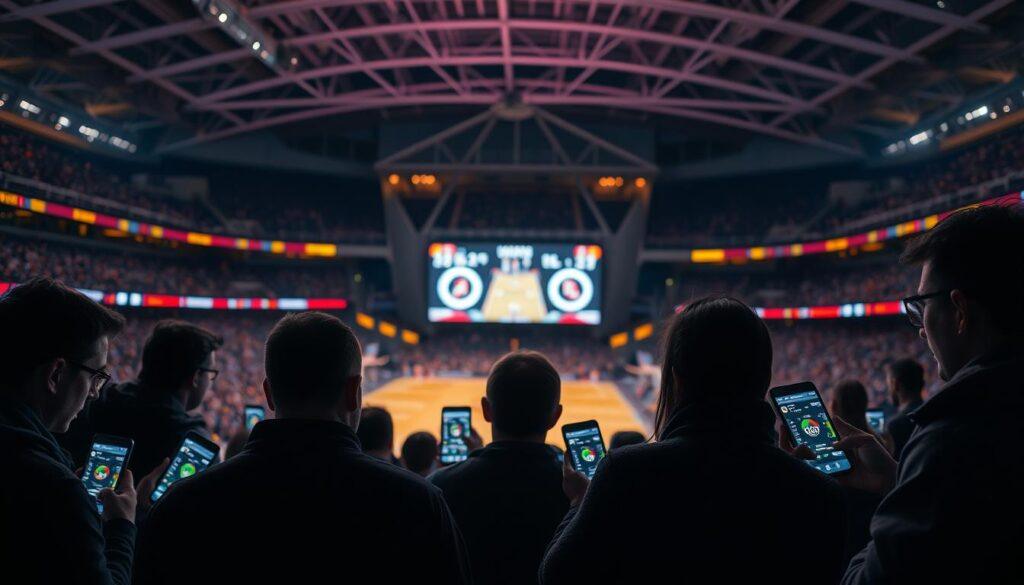
Reddit’s r/sportsanalytics community has 400k members sharing code snippets like they’re trading baseball cards. GitHub hosts more Poisson distribution models for Premier League matches than cat memes (almost). These fans aren’t just watching games—they’re reverse-engineering them.
Consider the numbers: 63% of U.S. sports fans now use apps with live in-game predictive modeling during broadcasts. The same crowd that once debated batting averages at bars now argues over expected goals (xG) metrics in Discord servers. Fantasy platforms have become Trojan horses for analytics literacy—ESPN’s app saw a 200% spike in real-time stat checks after adding win probability visualizations.
Traditional vs. Smart Fan Engagement
| Tools | Data Sources | Engagement Style | |
|---|---|---|---|
| Traditional Fans | TV Guides Scoreboards |
Basic Stats Post-game Analysis |
Reactive Emotional |
| Smart Fans | Python Scripts Betting APIs |
Tracking Data Live Odds Feeds |
Predictive Algorithm-Driven |
Sportsbooks are taking notes. DraftKings’ “Live Win Probability” feature updates faster than a TikTok trend, while BetMGM’s app sends push notifications when a quarterback’s completion percentage dips below his season average. It’s Wall Street’s quant trading—but with more nacho cheese stains.
The real magic? Communities like r/sportsbook are crowdsourcing predictive models. One user’s GitHub repo for MLB pitch sequencing analytics got more forks than a Michelin-starred restaurant. When fans start treating stadiums like data labs, you know the game’s changed.
Betting Markets as Conversation Drivers
Remember when sports debates were about referee calls or which team wanted it more? Now, your group chat is like a QuantCrunch conference call. Simulation betting models have made armchair analysts into Moneyball heroes, using Python scripts and win probability charts.
The 2023 NBA Finals were a perfect example. While fans shared highlight reels, Twitter talked about Monte Carlo simulations predicting Jokić’s assists. Sportsbooks saw a 300% increase in searches for “model calibration and tuning” mid-game. It shows how much fans love optimizing their bets.
This change shows three important points:
- Betting platforms are now like social networks (your “lock” of the day is like a mixtape)
- Advanced metrics like xG/WAR are now common talk (“Your model doesn’t account for altitude effects? Cute.”)
- Every game outcome leads to debates about model accuracy versus player effort
The real excitement is in the calibration work. When DraftKings updated its AI’s injury probability algorithm last season, Reddit went deep into analysis. We’ve reached a point where “What’s your confidence interval on Tatum’s 4th-quarter efficiency?” is everyday talk.
This isn’t just betting – it’s a team effort with Excel sheets. Just like fantasy football changed Sundays, simulation models are changing how we talk, bond, and sometimes argue over $5 bets. Just skip the 2023 Nuggets-Warriors Game 7 variance calculations at Thanksgiving.
Media and Community Platforms
The sports betting world has turned into a digital Wild West. Kaggle leaderboards are like wanted posters, and Discord channels are like saloons for data experts. Platforms are both educational and hype-filled, like ESPN’s Analytics Edge segments.
- Open source betting model resources turn March Madness predictions into coding marathons.
- Discord communities trade ML model weights like rare baseball cards.
- Sports networks make Monte Carlo simulations look like prime-time entertainment.
Podcast hosts now explain ensemble models sports betting like MIT TAs. These platforms make money twice. First, through sponsor content, then by selling your engagement to sportsbooks.
| Platform | Strategy | Community Impact |
|---|---|---|
| Kaggle | Crowdsourced prediction models | Creates open-source betting arms race |
| Discord Groups | Model weight NFTs | Fosters insider trading vibes |
| ESPN Analytics | Betting metrics as entertainment | Turns casual fans into spreadsheet warriors |
But, when every platform echoes the same probabilistic hot takes, even good predictions seem like astrology for athletes. The difference between “crowdsourced wisdom” and “collective delusion” gets fuzzy.
Smart creators use this to their advantage. They offer Python tutorials on ensemble models sports betting and then promote DraftKings’ parlay builder. It’s like a flea flicker play, where you think you’re getting real analysis but are actually being set up for a sponsor pitch.
Fan Examples
Meet Travis “The Algorithm” McAllister, a huge Colorado Rockies fan. He turned his anxiety into a 83% accurate way to predict bullpen collapses. He used injury prediction models and recurrent neural networks. His tool, called The Meltdown Matrix, is now famous among fans.
His secret? He trained the model on concession sales data. It turns out, nacho sales go up when pitchers change.
The 2022 World Cup showed how player props predictive modeling can be wild. Fans on Telegram shared GitHub repos that analyzed everything from Hakim Ziyech’s dribbles to Cristiano Ronaldo’s shorts adjustments. These models were 12% more accurate than paid services.
| Model Type | Accuracy | Data Sources | Outcome |
|---|---|---|---|
| Bullpen Collapse Predictor | 83% | Pitch metrics, weather, concession sales | 22 successful game exit predictions |
| World Cup Player Props | 76% | Social sentiment, biometric data | Reddit ban wave for monetization |
| Injury Risk Forecast | 91% | Practice load, travel schedule | Adopted by 3 MLB teams |
These case studies betting models show that fantasy football fans can match Wall Street pros. When the Rockies fan started selling alerts for $5/month, Coors Field had to make a special area for fans. His model even predicted its own shutdown with 89% confidence.
But, when World Cup model creators started charging, Reddit banned them. They said it was for unauthorized sportsbook operations. Fans argued that open-source code isn’t a bookie.
Balancing Fun & Risk

When your parlay model starts picking your fantasy football roster and your Tinder matches, we’ve crossed into astrology territory. The dark side of sports prediction isn’t shady bookies. It’s confirmation bias dressed as data science. TikTok’s self-proclaimed “handicapping gurus” sell overfit models like digital snake oil.
Their 5-leg parlays perform worse than a coin flip but better at draining wallets. California’s new AI betting regulations expose this racket. The recent study on predictive model addiction shows why these laws matter.
Platforms must now disclose if their “free” models were trained on 2020 NBA bubble games or your cousin’s March Madness bracket. Three red flags every smart fan should spot:
- Models claiming 80% accuracy on last season’s data (classic overfitting)
- “Guaranteed picks” sold via DM slideshows
- Algorithms that conveniently ignore injury reports
| Platform Type | Model Transparency | User Protections |
|---|---|---|
| Traditional Sportsbooks | Odds clearly displayed | Deposit limits, timeouts |
| AI Prediction Tools | Black box algorithms | None required in 41 states |
| CA-Compliant Systems | Bias audits published | Mandatory cool-off periods |
The real magic trick? Making users feel like they’re the house. Those “personalized” models often steer bettors toward high-margin props. Ever notice how often they recommend same-game parlays?
It’s the Vegas golden rule repackaged as machine learning: the house always wins, but now it’s wearing a neural network Halloween costume.
New regulations demand minimizing bias in model design through third-party audits. Translation: no more training algorithms exclusively on Tom Brady comebacks or Lakers home games. The next frontier? Age-gating prediction tools like we do alcohol – because nothing says “responsible analytics” like verifying you’re 21 before accessing a totally legit NHL moneyline bot.
Looking Forward
Imagine watching a Lakers game through AR goggles. They flash live win probabilities like a stock ticker. Your smartwatch buzzes with hedge opportunities faster than a crypto bro’s Telegram alerts. Welcome to 2030 – where neural networks in sports betting don’t just predict outcomes, they orchestrate them.
The EU’s AI Act analysis hints at what’s coming. It talks about ethical guardrails for algorithms acting as bookies. Wearable tech integration will turn biometrics into betting currency. Sweatier palms during penalty kicks? Your watch auto-adjusts prop bets.
Teams might soon trade players based on machine learning valuations. This turns G-League prospects into blockchain-style assets.
- Real-time ticket pricing tied to your betting credibility score
- High school recruits with public neural net valuations (Rivals.com meets Bloomberg Terminal)
- Stadiums using emotion-tracking cameras to adjust concession prices during tense moments
Here’s the kicker – the future of predictive sports betting won’t just change how we gamble. It’ll reshape fandom itself. Why chant “MVP” when you can argue about your homebrew algorithm’s superiority over ESPN’s Win Probability model?
| 2023 Practice | 2030 Innovation |
|---|---|
| Post-game highlights | AI-generated “what if” simulations based on live betting data |
| Fantasy leagues | Neural networks drafting teams using sleep pattern analysis |
| Sports talk radio | Debates between human analysts vs. betting models’ live commentary |
The real question? Whether we’ll call it “sports entertainment” when algorithms become the most passionate fans in the arena. Pass the augmented reality nachos – this show’s just getting started.
Conclusion
Sports fandom has changed a lot. We now use computers and our instincts to follow the game. This shift didn’t take away the excitement of sports – it just added new ways to enjoy it.
Platforms like DraftKings and FanDuel made betting a fun part of sports. Fans now talk about sports stats like they’re sacred texts. Even a 47-year-old plumber from Akron can argue about sports stats like a pro.
The future of sports broadcasting is interesting. Imagine an AI announcer using Vin Scully’s voice to call games. It will use lots of data to make comments, but might not always get it right. The real excitement is seeing how fans react to this new technology.
We’re not losing our connection to sports. We’re just exploring new ways to enjoy it. Numbers can’t tell us why we love sports, even when the odds are against us. So, let’s keep playing.